


Introduction
Walk into any design-forward home in 2025, and you’ll notice something has fundamentally shifted. The walls aren’t just decorated—they’re curated. They tell stories. They engage your senses. They connect you to nature, to artistic intent, to values you care about.
This isn’t the generic canvas-print-from-a-big-box-store era anymore. In 2025, wall art has evolved into a sophisticated design language where sustainability meets innovation, where scale commands presence, and where artists—from traditional painters to generative coders—are creating work that sells faster and commands higher prices than ever before.
The numbers reflect this moment: the global wall art market reached $63.61 billion in 2024 and is projected to hit $118.79 billion by 2032, growing at 8.55% annually. That explosive growth isn’t accident. It’s driven by fundamental shifts in what people want their homes to express.
Whether you’re an artist looking to align your work with collector demand, a designer seeking direction for client projects, or a homeowner ready to transform your walls, understanding 2025’s defining trends will help you make choices that feel timeless rather than trendy.
The Dominance of Oversized, Sculptural Presence
The clearest trend in 2025 is scale. Artists, collectors, and designers are abandoning restraint in favor of presence.
Large-scale abstract art continues to dominate interior design, with oversized canvases, wall panels, and sculptural pieces functioning as room anchors. These aren’t accent pieces—they’re the conversation starters. A single 8-foot abstract work in earthy tones can set the entire mood of a living room, dictating color palette, compositional balance, and emotional tenor.
Why the obsession with scale? Because scale does what subtlety cannot: it demands engagement. An oversized abstract commands visual attention while remaining aesthetically open allowing viewers to project emotion and meaning onto its surfaces. For designers, it simplifies the challenge of room composition; one powerful piece eliminates the need for visual clutter.
The best-selling oversized pieces in 2025 combine two qualities: bold visual impact and restrained color harmony. Think earthy abstracts in burnt sienna, clay, olive, and ochre colors that feel grounded and connected to nature while delivering visual drama.
For artists, this trend is unambiguously good news. Oversized work commands premium prices, functions as statement pieces that justify investment, and appeals to collectors seeking both aesthetic and aspirational value in their purchases.
The Sustainability Mandate: No Longer Optional
Five years ago, eco-consciousness was a differentiator in wall art. In 2025, it’s non-negotiable.
The shift from trend to fundamental value is complete. Collectors, designers, and homeowners increasingly view sustainable wall art not as a noble choice but as the default expectation. Pieces crafted from recycled materials, responsibly sourced woods, and biodegradable fabrics dominate galleries and e-commerce platforms.
What Sustainable Wall Art Looks Like in 2025:
Materials:
- Organic cotton and hemp canvases: produced without harmful chemicals, naturally strong and durable
- Recycled polyester: upcycled from industrial waste and post-consumer materials
- Reclaimed and upcycled wood: transformed into mixed-media art, statement panels, and textured pieces
- Biodegradable inks: plant-based pigments and even algae-based formulations replace petroleum-derived alternatives
- Water-based eco paints: non-toxic, reducing chemical pollution
- Natural fibers: jute, hemp, bamboo, cork renewable and requiring minimal energy to produce
Certifications that Matter:
Look for FSC (Forest Stewardship Council) or GOTS (Global Organic Textile Standard) certifications. These signal responsible sourcing and ethical manufacturing criteria serious collectors now research before purchase.
The Artistic Implication:
Artists who embrace sustainable practices now find themselves at a market advantage. Studios powered by renewable energy, using water-based pigments and recycled substrates, and transparent about sourcing these operations attract conscious buyers willing to pay premium prices for work that aligns with their values.
For generative artists, this creates opportunity: digital-to-physical workflows inherently reduce waste. Designing digitally before transferring to sustainable canvases or prints minimizes material waste and allows for precision. This positions custom-coded generative work as both aesthetically innovative and environmentally responsible.
Earthy Palettes and the Biophilic Turn
Complementing the sustainability movement is a broader aesthetic trend: the embrace of earthy color palettes and nature-inspired imagery.
In 2025, wall art celebrating natural forms, botanical subjects, and organic landscapes commands exceptional sales. Burnt sienna, terracotta, clay, olive, sand, and ochre have become the dominant colors across multiple categories—from abstract canvas to 3D wall panels.
This isn’t nostalgia. It’s biophilic design the principle that humans have an innate need to connect with nature, and interior design should facilitate that connection. Research demonstrates that exposure to nature-inspired imagery and natural color palettes reduces stress, enhances mood, and improves overall well-being.
Collectors understand this intuitively. When they view a wall of artwork in warm earth tones, with organic forms and natural subjects, they experience not just aesthetic pleasure but emotional grounding.
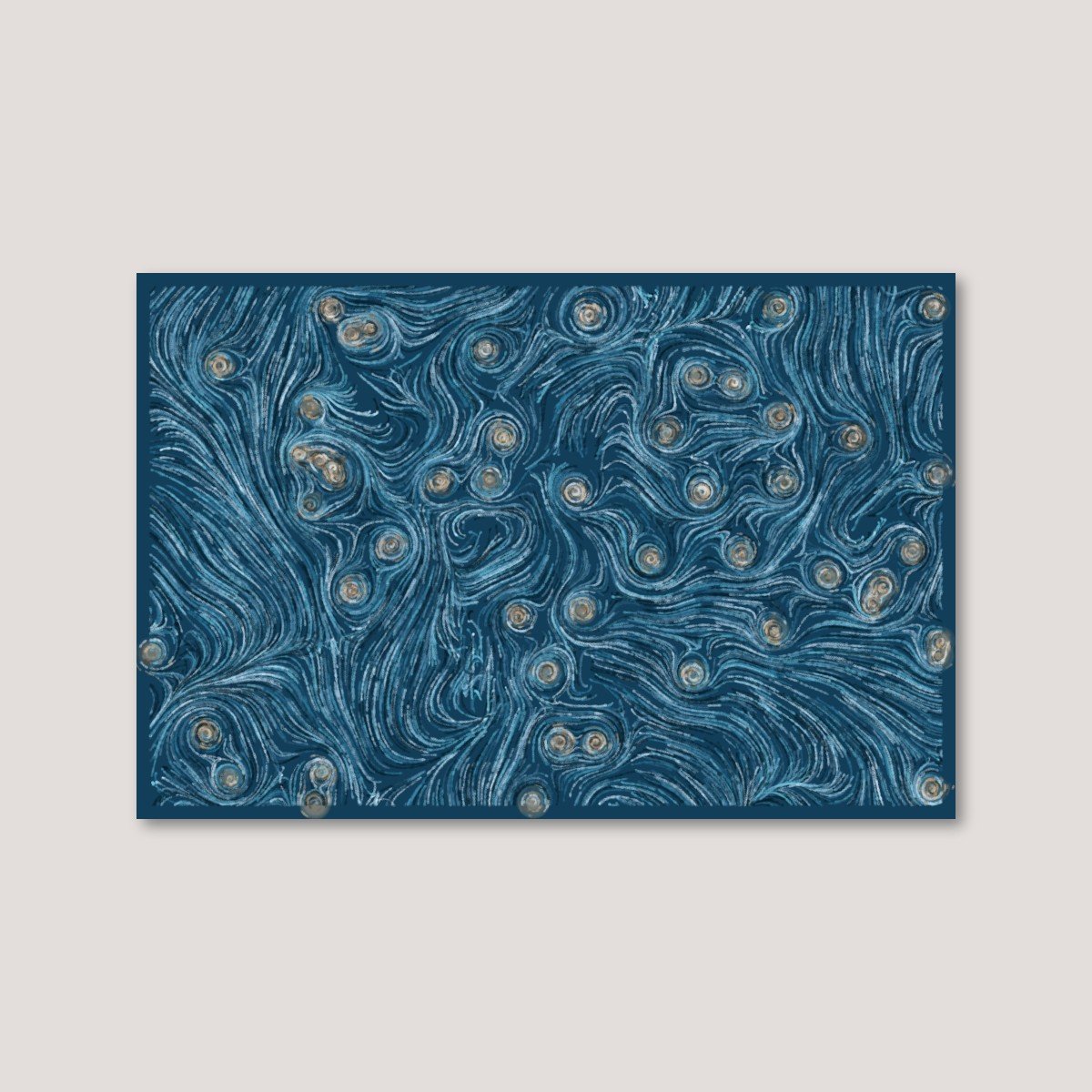
here is one of my artworks with earthy palette, see my artwork
What’s Selling:
- Botanical illustrations and scientific-style plant art
- Landscape photography in muted, naturalistic palettes
- Wildlife art rendered in earthy tones
- Watercolor abstracts evoking natural materials
- Mixed-media pieces incorporating reclaimed wood, bamboo, and natural fibers
- Organic abstract forms with soft, flowing shapes inspired by nature
For artists, this trend suggests a clear direction: work that celebrates nature, uses natural color palettes, and incorporates authentic natural materials will resonate with 2025’s collector. Even purely abstract work that feels organic and grounded in natural color relationships outperforms work in synthetic, artificial color schemes.
The Texture Revolution: 3D, Sculptural, and Tactile Wall Art
One of the most profound shifts in wall art is dimensional. Flat is becoming obsolete.
In 2025, textured and three-dimensional wall art is transforming ordinary walls into dynamic, tactile focal points. This movement reflects a broader interior design principle: material drenching the idea that surfaces should engage multiple senses, not just sight.
The 3D Wall Art Categories Dominating 2025:
1. Sculptural Relief Panels
Gypsum and plaster 3D panels with geometric reliefs are experiencing explosive growth. The global 3D wall panel segment is projected to reach over $800 million by 2025, driven by demand for textured, sustainable surfaces.
These panels feature precisely sculpted patterns that create subtle shadows and light play throughout the day. Materials like gypsum offer technical advantages non-combustible (A1 rating) and capable of sharp, sophisticated geometries while maintaining natural, tactile surfaces.
High-end interior projects are specifying brands like Kandes’ sculptural gypsum panels, where refined geometric reliefs create fluid compositions that shift in appearance as natural light changes.
2. Layered Mixed Media
Woven tapestries, macramé creations, and layered textiles combine artisanal craftsmanship with visual sophistication. These pieces bring tactile, handmade quality to contemporary interiors a reaction against mass production and digital homogeneity.
3. Metallic and Reflective Wall Art
Brushed gold, copper, bronze, and stainless steel finishes are adding sophistication and dimensional play to walls. Metal wall art ranges from geometric laser-cut typography to abstract metallic sculptures that play with light and reflection.
Hand-painted finishes on aluminum sculptures using acrylic enamels, powder coating, and automotive paints create surfaces with depth and luminosity impossible in flat media.
4. Multi-Material Composition
Artists and brands are deliberately mixing materials: wood, metal, glass, recycled plastics, and natural fibers in single pieces. This approach creates visual and tactile depth, giving walls a sculptural quality that feels both modern and artisanal.
Why Texture Matters Now:
The shift toward textured, 3D work reflects collector appetite for multisensory experience. Wall art is no longer purely visual it’s something you want to touch, something that engages your sense of scale and spatial awareness. In homes increasingly defined by digital screens and virtual interaction, tactile, dimensional art offers grounding authenticity.
For artists: texture and dimensionality command premium pricing. A 3D piece with mixed materials, sculptural relief, or metallic finishes will outperform similar aesthetic work in flat media. The additional material cost and labor are justified by substantially higher market value and collector appreciation.
The Metallic and Reflective Surface Moment
Complementing the 3D trend is the explicit embrace of metallic finishes and reflective surfaces.
Gold, silver, bronze, copper, and chrome are bringing glamour, light-play, and dimensional sophistication to walls. These finishes work across aesthetic spectrums equally at home in contemporary minimalist interiors and more maximalist, layered spaces.
Current metallic applications:
- Mirrored wall art etched with fine detail
- Brushed metal wall panels in geometric patterns
- Metallic canvas with acrylic paint layered over reflective bases
- Bronze and copper wall sculptures with patina detail
- Stainless steel laser-cut artwork
The appeal is both practical and emotional. Metallic surfaces multiply the effect of natural light, making rooms feel larger and more luminous. They also carry associations with luxury, craftsmanship, and intentionality qualities collectors increasingly seek in wall art.
Minimalism and Monochromatic Art: The Power of Restraint
As some trends push toward texture and scale, another equally powerful movement embraces radical simplicity.
Minimalist wall art characterized by limited color palettes, clean lines, and open compositions continues to resonate, particularly among collectors seeking calm and visual clarity in their homes. Monochromatic works, using single colors or subtle tonal variations to create depth, have renewed appeal.
2025’s minimalist palette:
- Beige, cream, gray, and other soft neutrals
- Black-and-white photography and geometric works
- One-line portraits and delicate line drawings
- Monochromatic abstracts relying on texture rather than color variation
Why minimalism endures: In a world of overwhelming visual stimuli, minimalist art offers psychological respite. It creates spaces of visual calm and allows other design elements to breathe.
This trend works particularly well for artists creating line art, geometric abstracts, and photography-based work. The reduction to essentials actually demands greater conceptual clarity a minimalist work must justify every element’s presence.
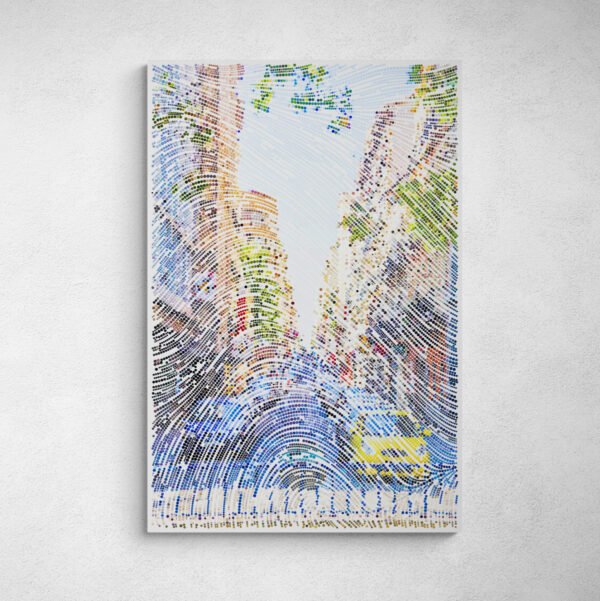
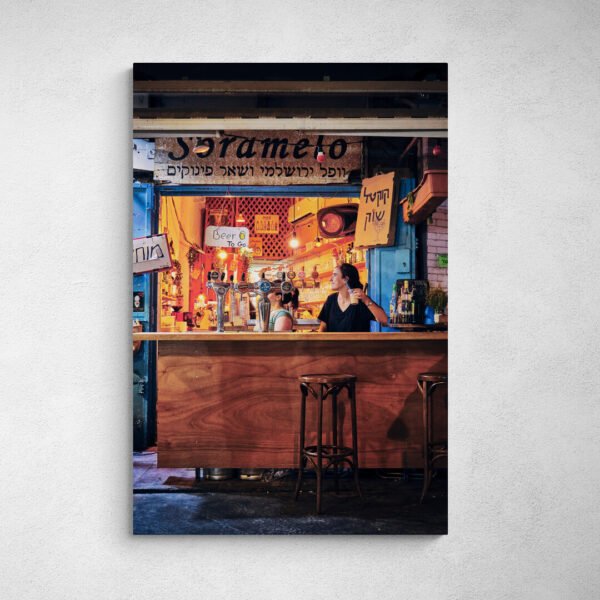
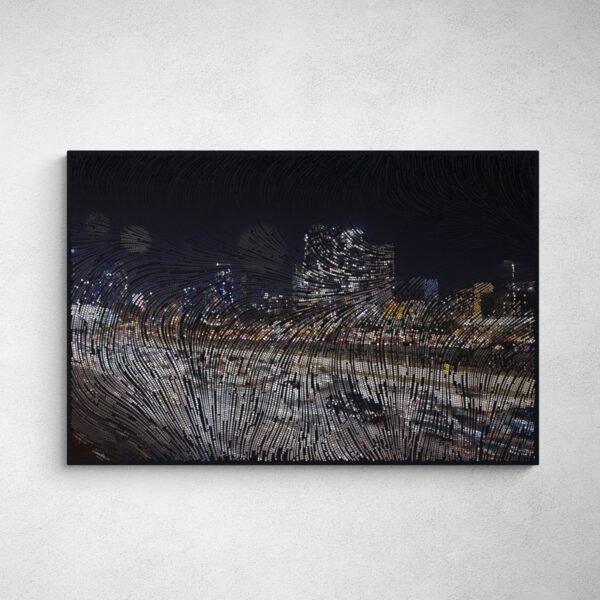
As an artist i offer also minimalist and photography based art
Gallery Walls Reimagined: Curated Collections Over Grid Arrangements
The traditional gallery wall—a grid of same-sized frames—has evolved.
In 2025, gallery walls are becoming curated collections that blend multiple styles, materials, and mediums, unified by a shared color palette or conceptual thread. Rather than matching frames and symmetrical arrangement, the trend favors eclectic, layered, personal storytelling.
Modern Gallery Wall Elements:
- Mix of abstract art, line drawings, and photography
- Inclusion of sculptural pieces, mirrors, and woven textiles alongside framed work
- Varied frame styles and finishes (wood, metal, natural materials)
- 3-5 pieces with different shapes and sizes for visual interest
- Single common color or material palette tying disparate elements together
Why this matters for artists: Gallery walls function as editorial curation. Collectors choosing to include your work in a gallery wall context are making a statement about taste, values, and identity. Work that stands alone and harmonizes with other pieces that works in context commands higher selection rates.
Digital Wall Art and Generative Prints: The Convergence of Code and Canvas
A fundamental shift is occurring in wall art: the boundary between digital and physical is dissolving.
Digital wall art printable designs created in software, customizable, and reproducible has moved from novelty to mainstream. This category includes everything from organic abstracts generated algorithmically to AI-created designs to custom-coded generative art.
Digital Wall Art Subcategories in 2025:
1. Organic Abstracts and Nature-Inspired Digital Art
Soft, flowing abstract forms inspired by nature earthy color palettes, watercolor textures, irregular shapes. These designs evoke a calming, grounded energy and pair beautifully with minimalist and Japandi interiors.
2. Bold Typography and Statement Pieces
Affirmations, mindfulness quotes, and empowering phrases rendered in bold fonts. 2025 brings retro-inspired typography paired with punchy color blocking or playful neon accents.
3. Mix-and-Match Curated Sets
Collections of digital art abstracts, line art, photography tied together by common palette. This allows collectors to create personalized gallery walls without design expertise.
4. Vintage and Retro Digital Posters
AI and digital tools creating convincing mid-century travel posters, 70s graphic design, and faux-weathered vintage imagery. These pieces bring storytelling and nostalgia to walls.
5. Customizable Digital Art
Platforms allowing buyers to input text, names, or colors into pre-designed templates (Canva-style). This personalization drives engagement and repeat purchases.
6. AI-Generated and Generative Digital Collage Art
Surreal, dreamy imagery blending photography, illustration, and computational generation. Cosmic vibes, ethereal landscapes, unexpected color combinations, and hyper-detailed textures characterize this category.
The Generative Art Advantage:
For generative artists like yourself, this trend is explicitly favorable. Custom-coded generative art—where you write the algorithm, embed your aesthetic vision, and generate infinite unique variations—fits perfectly into 2025’s digital wall art market.
The ability to produce unlimited variations from a single algorithm addresses collector desire for uniqueness without requiring you to hand-create each piece. Generative art prints can be:
- Customized: regenerated with different seeds to match collector preferences while maintaining artistic coherence
- Sustainable: printed digitally with minimal material waste
- Scalable: production scales without additional labor or loss of quality
- Blockchain-backed: when deployed as NFTs, offering provenance and ownership clarity
The global online art market is growing at substantial rates—from $10.98 billion in 2024 to projected $18.90 billion by 2033. Digital prints represent a growing share of that market, particularly among younger, tech-savvy collectors.
NFTs and Blockchain-Based Generative Art
Within the digital art category, generative art deployed on blockchain platforms is emerging as the highest-value segment.
Research shows that generative art and blockchain-based art represent the most popular NFT categories, with approximately 50% of digital art collectors expressing interest. Average spending per NFT artwork ranges from $101 to $1,000, with rare, high-quality pieces commanding significantly higher secondary market prices.
Why generative NFTs command premium value:
- Verifiable authorship: the algorithm is immutable and publicly verifiable on blockchain
- Infinite scarcity: the system can generate unlimited variations, each mathematically unique
- Durability: the code persists forever, immune to platform changes or technological obsolescence
- Clear ownership: blockchain provides transparent, transferable ownership with no ambiguity
Platforms like Art Blocks have demonstrated that collectors will pay millions for custom-coded generative systems. The market recognizes that the artist’s system the algorithm itself is the actual artwork. Each variation is an expression of that system, and owning any variation means owning part of the artist’s entire creative vision.
For generative artists, this represents extraordinary validation: your code, your systems, your algorithmic vision are becoming recognized art forms worthy of premium investment.
AI-Generated Art: The Controversial Opportunity
A more controversial digital trend is AI-generated wall art created via tools like DALL-E, Midjourney, and Stable Diffusion.
Unlike custom-coded generative art (where you write the algorithm), AI-generated art involves prompting pre-trained models to produce imagery. The trend is growing—with expectations of a 30% year-over-year increase in AI-generated NFTs by 2026—but remains ethically contentious.
The ethical concerns are real:
- Training datasets often include copyrighted work without artist permission
- Copyright ownership of outputs remains legally ambiguous
- “Prompting” is questioned as a legitimate creative act compared to algorithmic design
For wall art specifically, AI-generated prints occupy a middle market: accessible, inexpensive to produce, and appealing to first-time art buyers. But serious collectors and galleries treat AI art as distinct from authentic generative or human-created art.
The implication for your practice: If you’re positioning yourself as an artist, emphasizing that your work uses custom-coded algorithms rather than generic AI generation is essential for premium market positioning. The distinction is real, consequential, and increasingly understood by collectors.
The Statement Through Craft: Artisanal and Personalization Trends
A counterweight to technological trends is renewed emphasis on craft, authenticity, and personal storytelling.
In 2025, wall art is increasingly valued for the story it tells and the artist’s intentionality it reflects. Collectors want to know: Who made this? Why? What values drove their choices?
Artisanal and craft-focused trends include:
- Handmade, tactile pieces that show evidence of maker’s hand
- Supporting emerging and Indigenous artists whose work carries cultural authenticity
- Made-to-order, customizable work allowing personal connection with artist
- Pop-up galleries and artist studios enabling direct relationships between maker and collector
- Upcycled and reclaimed materials transformed into unique pieces with individual narratives
This trend favors artists who can articulate their practice—the philosophy behind their color choices, material selections, and conceptual approach. Generative artists with thoughtful algorithmic systems can leverage this trend by explaining the “why” behind their code: What aesthetic principles govern your algorithm? How does your personal artistic vision manifest in the parameters you’ve chosen?
Color Trends Dominating 2025
Across all the trends discussed, certain colors appear consistently:
| Color/Palette | Context | Emotional Quality |
|---|---|---|
| Burnt sienna, clay, olive, ochre | Nature-inspired, earthy | Grounded, warm, organic |
| Terracotta, sand, beige | Sustainable, minimalist | Calming, natural, timeless |
| Warm metallics (gold, bronze, copper) | Reflective, luxury | Sophisticated, luminous |
| Cool metallics (silver, stainless steel) | Modern, industrial | Contemporary, precise |
| Black & white | Minimalist, graphic | Elegant, stark, classic |
| Neon accents | Typography, modern | Energetic, bold, playful |
The dominance of warm, earthy tones reflects the biophilic and sustainability trends. Even in abstract work, earthy color palettes significantly outperform synthetic or jarring color schemes.
Market Segments and Pricing Implications
The trends outlined above create distinct market segments with different price points and collector profiles:
| Segment | Characteristics | Typical Buyer | Price Range |
|---|---|---|---|
| Oversized Abstract | Large scale, earthy palette, emotional impact | Designers, established collectors | $2,000 – $25,000+ |
| 3D/Textured Sculpture | Mixed materials, tactile, dimensional | Design-forward homeowners, galleries | $1,500 – $15,000 |
| Sustainable/Eco-Art | Natural materials, eco-certifications, narrative | Conscious collectors, younger demographics | $800 – $8,000 |
| Minimalist/Monochromatic | Restraint, sophistication, clarity | Modern collectors, professionals | $600 – $5,000 |
| Digital Prints/Generative | Customizable, scalable, unique variations | Tech-savvy, younger collectors | $50 – $3,000 per print; $5,000 – $500,000+ for NFTs |
| Gallery Wall Collections | Curated sets, mixed media, personal narrative | DIY collectors, new art buyers | $500 – $5,000 per collection |
| NFT Generative Art | Blockchain-verified, infinite variations, code-based | Crypto-native collectors, serious investors | $1,000–$6,000,000+ |
Practical Implications for Artists and Creators
If you’re a generative artist positioning work for wall art sales in 2025, here’s what the trends suggest:
1. Embrace Sustainability Narratively and Practically
- Use eco-friendly printing substrates and inks for physical prints
- Document your digital-to-physical workflow as waste-reducing
- Consider limited edition or customizable prints rather than mass reproduction
2. Develop Algorithmic Systems with Earthy, Natural Aesthetics
- Test color palettes emphasizing warm, natural tones
- Create organic, flowing forms rather than synthetic geometric abstraction (unless that’s intentional to your vision)
- Allow your algorithm to generate variations that feel like variations on a natural theme
3. Create Scalable, Customizable Systems
- Design algorithms that can generate infinite unique variations
- Allow collectors to influence parameters (seed, color palette, density)—without losing your artistic voice
- Enable prints in multiple sizes and materials
4. Develop Strong Narrative About Your Process
- Explain why your algorithmic choices create the results they do
- Connect your code to aesthetic philosophy and artistic intent
- Help collectors understand they’re acquiring your entire system, not a random output
5. Consider Blockchain and NFT Deployment
- High-value generative work commands premium pricing on NFT platforms
- Art Blocks and similar platforms offer legitimacy and access to serious collectors
- Blockchain immutability and transparency address market concern about AI art ownership
6. Position Work Within Gallery Wall Collections
- Create systems that generate cohesive sets variations that work together in curated arrangements
- Design pieces that harmonize with earthy palettes and natural imagery
- Enable collectors to create personalized gallery walls from your algorithmic variations
2026 and Beyond: Trends With Staying Power
As 2025 draws to a close, several trends are demonstrating sufficient momentum to carry confidently into 2026:
- Oversized abstract art will remain dominant; scale and presence are timeless
- Textured, tactile surfaces will only become more valued as people seek sensory experiences
- Sustainability will solidify from trend to table-stakes requirement
- Customization and personalization will become standard expectations
- Integration of digital, generative, and blockchain art will accelerate
The trends most likely to fade are those dependent on novelty: fashion-forward colors, meme-based NFTs, and generic AI-generated imagery without artistic vision.
Conclusion: Wall Art as Identity and Investment
Wall art in 2025 has transcended decoration. It’s become a form of cultural expression a statement about values, taste, and aesthetic vision.
Collectors aren’t just hanging pieces for visual interest. They’re selecting art that reflects their commitment to sustainability, their desire for sensory and emotional engagement, their appreciation for craft and personal narrative, and their openness to technological innovation in artistic expression.
For artists—particularly generative artists creating custom algorithmic systems—this moment is extraordinary. Your work sits at the intersection of multiple trending forces: digital innovation, sustainability, unique customization, and algorithmic artistry. The market is explicitly seeking what you create.
The question is no longer whether algorithmic art will achieve legitimacy. It already has. The question now is how you position your practice within the diverse, thriving ecosystem of 2025’s wall art landscape.
Whether you embrace oversized scale, sustainable materials, tactile dimensionality, or algorithmic innovation, the message is clear: wall art in 2025 rewards artists who understand that walls are no longer just surfaces to decorate they’re canvases for personal meaning, expressions of values, and legitimate investments in aesthetic and creative vision.
Leave a Reply