
Art and Photography Articles and Posts

  • What Wall Art Actually Means in 2026 (And Why Your Living Room Is Getting Smarter About It)

    What Wall Art Actually Means in 2026 (And Why Your Living Room Is Getting Smarter About It)

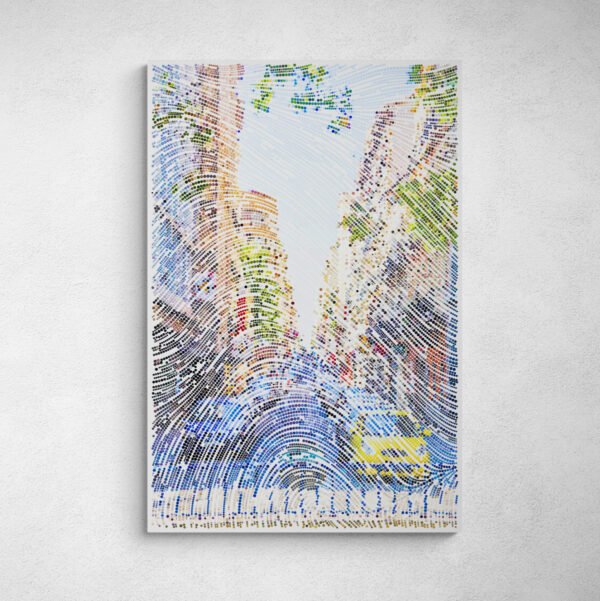
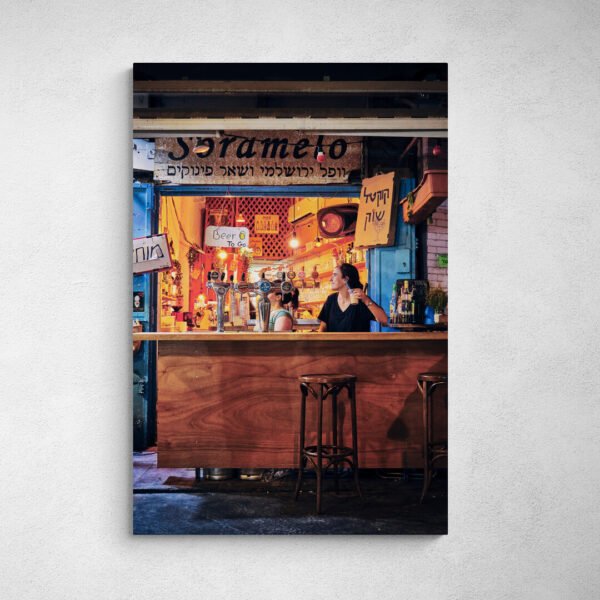
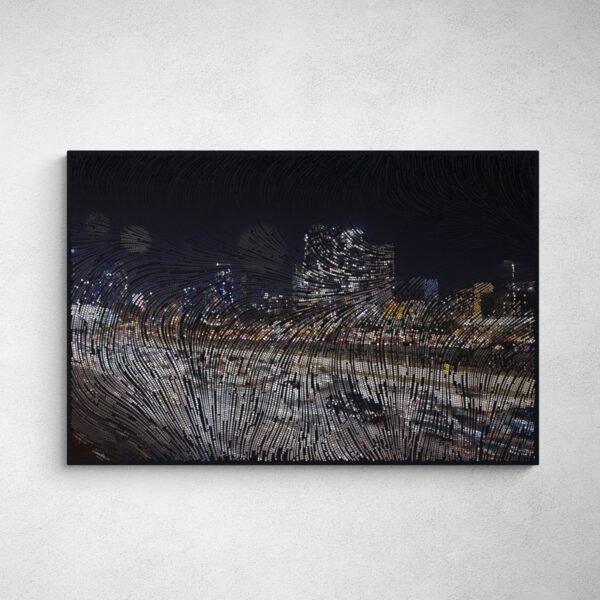
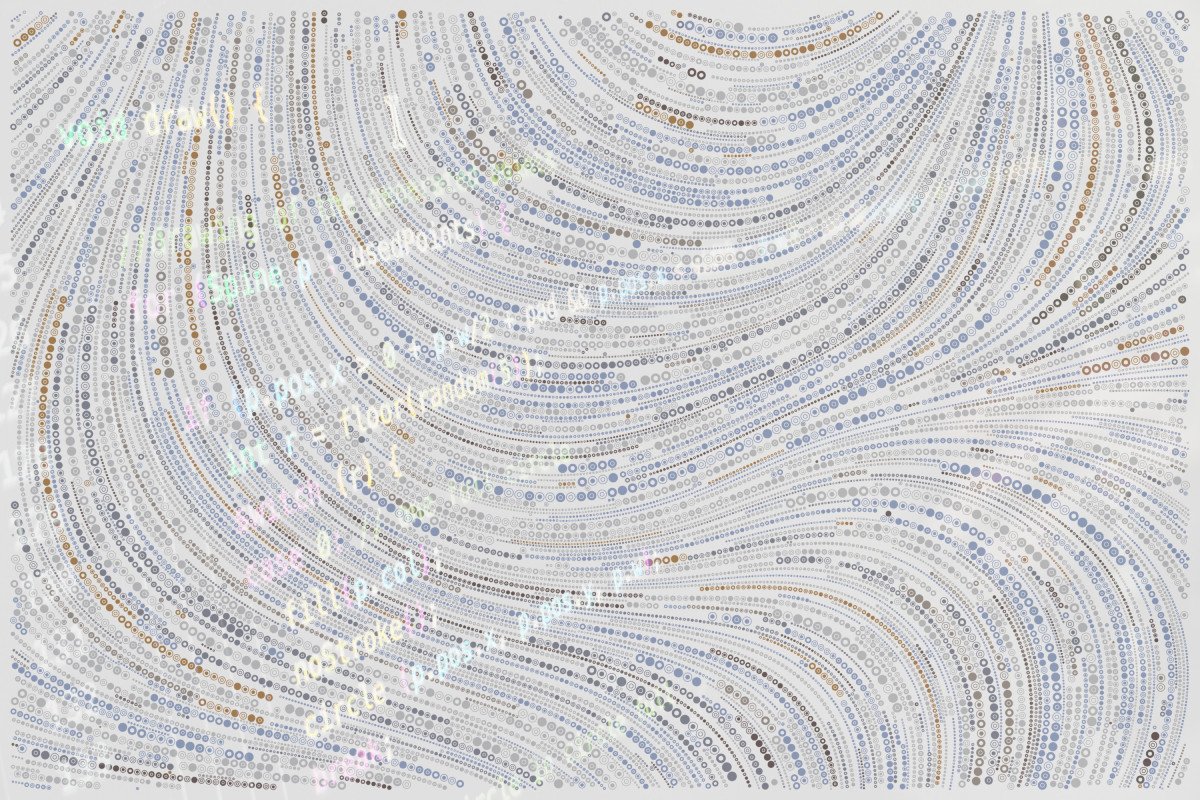
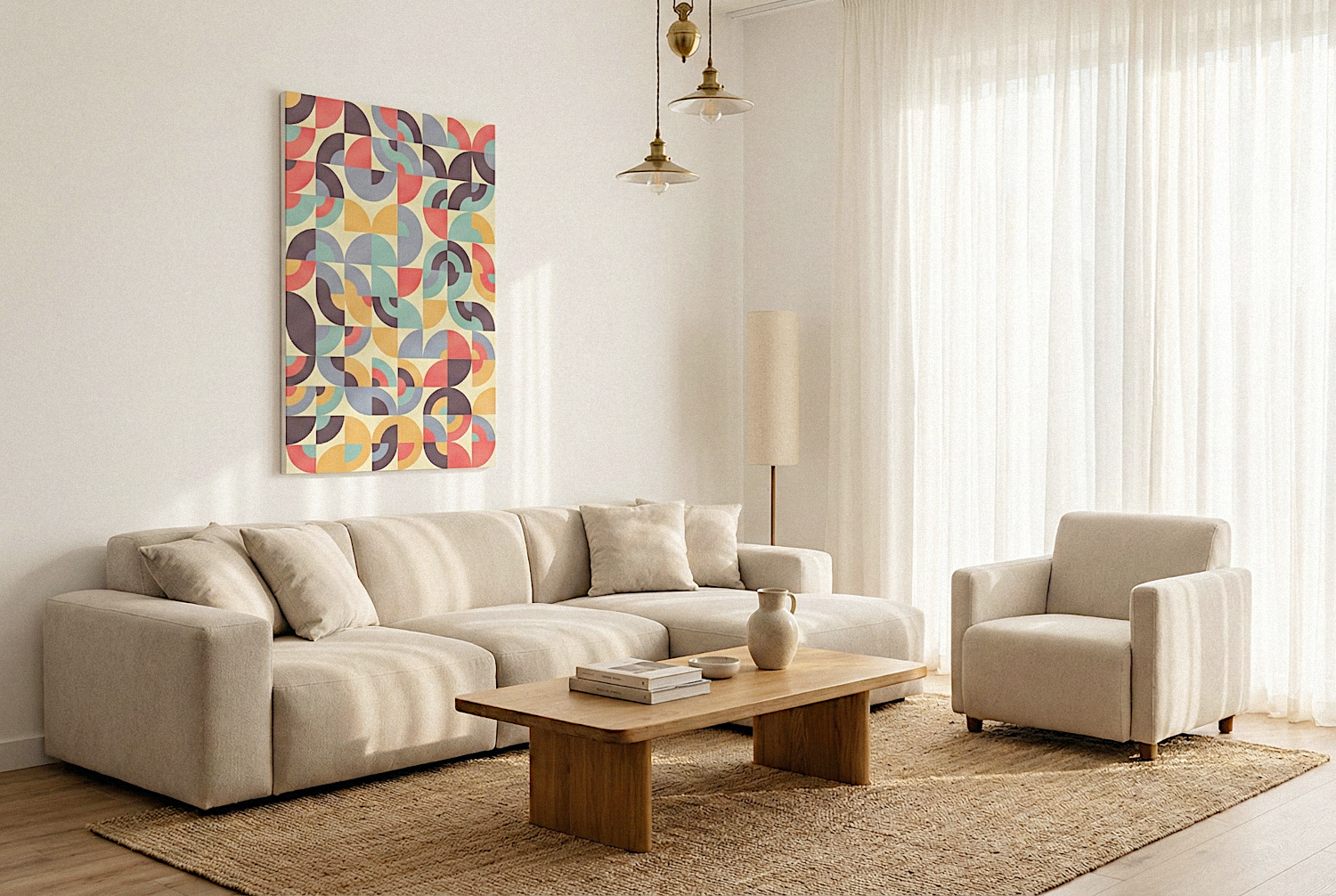
    Personalized retro wall art , Generative geometric artwork on a wall in the livingroom

    The moment I started researching what collectors are actually buying right now for their walls, I kept bumping into this surprising truth: nobody cares about matching their sofa anymore.

    I know that sounds like an exaggeration, but the data backs it up. Interior designers are reporting that people walk into their spaces with one thing in mind, and it’s not about coordinating colors or filling empty wall space. It’s about transformation. They want their walls to do something to how they feel when they come home.

    After months spent in homes, galleries, and collecting communities around the world, the shift is unmistakable. Wall art has stopped being decoration. It’s become something much more personal. And if you’re thinking about adding art to your walls this year, understanding what’s actually driving these changes will help you make choices you won’t second-guess in six months.

    Let me walk you through what I’m seeing, because it might change how you think about what belongs on your walls.

    who am I ?

    We’re All Looking for Emotional Sanctuaries

    There’s something happening in homes right now that most interior design articles miss. People aren’t building showcase rooms anymore. They’re building sanctuaries.

    After years of screens, notifications, and constant information overload, collectors are being deliberately intentional about creating spaces that slow their brains down. The walls are becoming part of that strategy. And it’s not working when the art is flat, rushed, or algorithm-friendly.

    What works is textured art. Dimensional surfaces. Pieces you want to stand in front of and actually look at, rather than scroll past. The work that’s selling fastest right now has physical depth, visible brushwork, or algorithmic complexity that reveals itself slowly. These pieces invite you to look longer, which means your nervous system gets more of what it needs: slowness.

    This is why abstract paintings with commanding color fields are having a major moment. One oversized piece above a sofa or bed does more for a room’s emotional atmosphere than a whole gallery wall ever could. It becomes the focal point your eye settles on when you walk through the door. And because it’s substantial, it actually changes the feeling of the space.

    If you’ve been thinking about adding wall art, this single insight changes everything. You’re not shopping for decoration. You’re shopping for how you want to feel at home.

    People Want to Know You, Not Just See Your Work

    Here’s something collectors consistently tell me: they want to own a piece of the artist behind the work.

    This isn’t just nice to know. It’s reshaping how art gets sold. Forty-three percent of collectors now buy directly from artists’ studios or websites. They want the story. They want to understand what made you choose that specific color. They want to know if this piece came from something you experienced or something you processed through code.

    When you’re shopping for art, you’re not just evaluating the final piece. You’re evaluating whether the artist’s vision connects with yours. And you’re asking: does this feel like it came from somewhere real?

    This matters because it means the artists winning right now are the ones who explain their work. Not in a pretentious way. Just genuinely. Why you made those choices. What you were thinking about. The technical process or the emotional impulse behind it.

    For generative artists particularly, this changes everything. The algorithm isn’t separate from your art. It’s an extension of your creative vision. When a collector understands that you custom-coded your algorithm to express something specific, that changes how they value it. They’re not buying algorithmic output. They’re buying your system. Your thinking.

    The same applies to fine art photographers. The why behind the shot matters as much as the composition. What drew you there? What were you trying to capture? That context transforms the photograph from a pretty image into a meaningful story.

    And for painters, the visible handiwork in your brushstrokes is part of the message. People can sense whether something was made with intention or rushed through. Slowness in the work translates to impact in the space.

    Personalization Isn’t Just an Option Anymore

    One of the clearest trends I’m tracking is that collectors no longer want to buy what everyone else is buying. Seventy percent of shoppers now prefer personalized items over standard alternatives. And when it comes to wall art, this preference becomes an actual purchasing decision.

    This is where generative art has a natural advantage that traditional art forms are still figuring out. Algorithmic systems that can generate unique variations while maintaining your artistic coherence solve a collector’s dilemma. They want something that’s genuinely one-of-a-kind. That speaks to them specifically. But they also want it to be unmistakably yours.

    With personalized generative art, you can offer both. A collector can choose colors, composition density, or aesthetic parameters that resonate with their space and sensibility, while the underlying algorithm ensures every variation is mathematically unique and deeply rooted in your artistic vision. It’s like having a custom commissioned piece without the months-long timeline or astronomical price tag.

    The numbers on this are impressive. Products with personalization options see conversion rates jump by as much as 40 percent. People who spend time customizing something become more committed to the purchase. They’ve invested in the decision. The piece feels like theirs in a way off-the-shelf art never can.

    For fine art photography, this opens possibilities too. Limited-edition prints with selective availability create scarcity. Collectors understand they’re getting something with real exclusivity. The print is signed, numbered, and limited. This enhancement in perceived value directly influences how much collectors will invest.

    Texture and Dimensionality Win Against Flat

    If I had to identify the single biggest shift in what collectors are buying, it’s this: flat art is losing ground to work that has depth and tactility.

    This is partly about the rise of dimensional pieces, 3D wall sculptures, and layered mixed media. But it also applies to how visual texture plays out on a flat surface. A painting with thick, visible brushwork commands more attention than a smooth, digital-looking finish. Photographic prints with subtle texture in the substrate feel more present than glossy finishes. Algorithmic art that creates visual complexity that reveals itself slowly outperforms simple, clean geometric patterns.

    The reason is psychological. We’re exhausted from screens. So when we look at wall art, we’re drawn to surfaces that feel analog, handmade, or complex. We want to see evidence of creation. That handmade feeling, even in algorithmic work, makes the piece feel like it came from someone, not something.

    Abstract paintings benefit enormously from this trend. Large-scale abstracts with layered color fields, gestural brushwork, or dynamic composition create the immersive experience collectors are seeking. The painting becomes a portal into the artist’s visual thinking, not just a color block for the wall.

    Size Actually Matters

    The other trend that surprised me at first but now makes complete sense: collectors are moving away from gallery walls toward single, oversized statement pieces.

    This is a fundamental shift in how people approach wall composition. Instead of building an intricate arrangement of multiple prints and frames, they’re selecting one commanding piece and giving it room to breathe. This piece becomes the architecture of the wall. Everything else in the room relates to it.

    If you’re an artist, this is significant. It means work that reads at large scale, that has enough visual complexity or emotional impact to anchor an entire room, is outperforming smaller pieces. A 4×5-foot abstract painting or an oversized fine art photograph becomes the focal point. The conversation starter. The thing that transforms how the space feels.

    Generative art scales beautifully in this direction. An algorithm designed to generate complex, layered abstract compositions can be output at any size without losing quality or visual interest. The larger the print, the more detail viewers discover. At 3×4 feet, your algorithmic work becomes an immersive experience rather than a wall decoration.

    The Story Matters More Than You Think

    When collectors buy abstract paintings, what are they actually buying?

    Most people assume it’s the color or the composition. But when I talk to collectors about their purchasing decisions, the story keeps surfacing. They’re drawn to work that carries meaning. Even abstract work that doesn’t represent anything specific still communicates something about how the artist thinks, processes emotion, or sees visual relationships.

    This is why it matters that you can articulate your work. Not in a way that limits interpretation, but in a way that invites collectors into your thinking. What were you exploring? Why those colors? What’s the visual principle that guides the composition?

    For photographers, the story is often about place. Where was this taken? What were you capturing? Fine art photography sells significantly better when there’s context about location, moment, or emotional resonance.

    For generative artists, the story is about your creative process. How did you develop the algorithm? What principles guide the parameters? What were you trying to achieve that couldn’t be achieved through other means? The more specific you can be about your intentionality, the more collectors understand they’re investing in your vision, not just the output.

    The data backs this up: collectors who understand the story behind a piece are willing to spend significantly more. They’re not just buying the object. They’re buying part of your creative journey.

    You Might Be Underestimating Emotional Connection

    I recently saw a collector spend over an hour in someone’s studio, going back and forth between two pieces. Not because they were identical, but because they were trying to figure out which one told the story they wanted to live with.

    This is what’s actually happening in the wall art market right now. People aren’t doing quick purchasing decisions. They’re asking: does this piece speak to me? Does it create the feeling I want in my space? Does it represent who I am or who I want to be?

    This emotional evaluation happens at a deeper level than aesthetic preference. It’s about identity. It’s about transformation. It’s about creating an environment that supports how you want to feel.

    This is why collectors are increasingly buying directly from artists. When you can see someone’s work in their studio, or read their voice on their website explaining their creative decisions, you get access to the emotional authenticity behind the work. That authenticity is what drives premium purchasing.

    For generative artists, this emotional connection comes through your explanation of your algorithmic vision. For photographers, it comes through the stories behind your work. For painters, it comes through the visible handwork and your articulation of what you were exploring.

    The artists winning right now are the ones who don’t hide their human element. They emphasize it.

    What This Means for Your Wall

    If you’re considering adding art to your space in 2026, here’s what actually matters:

    First, look for work that has depth. Whether it’s literal dimensionality or visual complexity, you want pieces that reward extended looking. Oversized or immersive-scale work translates to greater impact in actual rooms. The larger piece outperforms the gallery wall of smaller pieces.

    Second, seek out artists who can explain their work. Not pretentiously. Just genuinely. You want to understand what they were thinking about, what they were exploring, what’s meaningful to them. That context transforms the purchase from acquisition to connection.

    Third, personalization is no longer a luxury. It’s becoming standard. If an artist can offer variations tuned to your space or preferences while maintaining their artistic coherence, that’s a significant advantage. Generative art excels here. But photographers can offer customized framing or print selections. Painters can create work on commission that speaks directly to a space.

    Fourth, trust the artists building sustainable, thoughtful practices. Collectors now expect eco-conscious production. They want to know materials matter. They want artists who think about the environmental impact of their work. This signals deeper artistic intention overall.

    The Generative Art Advantage

    If I’m being honest, this is where I see the most interesting opportunity right now.

    Generative art solves several collector problems simultaneously. It offers customization within artistic coherence. It provides genuine uniqueness while maintaining artist vision. It can scale across price points without losing sophistication. And when the artist explains their algorithmic thinking, it creates an intellectual and emotional engagement traditional art sometimes misses.

    A collector can work with you to adjust parameters, select from variations, or even commission a unique algorithmic piece. They’re collaborating in your creative process. That collaboration deepens their connection to the work and their willingness to invest in it.

    The personalized aspect matters enormously for conversion too. Studies show that when people spend time customizing a product, they become more committed to purchasing it. They’ve invested mentally in the decision. It feels like theirs.

    Fine Art Photography Is Having Its Moment

    Photography has been fighting for legitimacy in the fine art market for decades. But that’s changing.

    Collectors are increasingly recognizing that exceptional photography deserves the same investment consideration as painting or sculpture. Limited edition prints with exclusivity, investment-quality production, and meaningful subject matter command serious pricing.

    The advantage you have as a fine art photographer is that people inherently trust photography. It reads as truthful. This doesn’t mean no one values painting or generative art. But there’s an accessibility to photography that invites collectors in. “This is a real place. This is a real moment.” That grounding creates trust.

    When you combine that trust with investment-grade production (museum-quality paper, archival inks, proper framing) and meaningful stories about your work, photography becomes a legitimate serious art purchase. Add personalization through custom framing options or limited variations, and you’ve addressed multiple collector desires.

    Abstract Painting Commands Presence

    Large-scale abstract work with commanding color fields or complex layering is one of the hottest categories right now.

    There’s a reason: abstraction doesn’t require explanation, but it does reward engagement. A collector stands in front of an abstract painting and they project meaning onto it. But they also appreciate the pure visual experience. The color relationships. The compositional balance. The evidence of creative decision-making in every brushstroke.

    Oversized abstract paintings become environmental pieces. They change how the room feels. If you paint large, you’re operating in an interesting moment where that scale is actually valued and sought after.

    Ready to See What Could Work in Your Space?

    If what I’ve described resonates with you, I’d like to show you three ways we can collaborate to create something meaningful for your walls.

    Personalized Generative Art brings together algorithmic sophistication with genuine one-of-a-kind customization. You choose the aesthetic direction, color palette, or compositional density, and the algorithm generates something mathematically unique that’s unmistakably connected to a deeper artistic vision. Limited editions available. Custom variations by request. Each piece is yours in a way mass-produced art never could be.

    Fine Art Photography offers the grounding of real places and moments, combined with investment-grade production and exclusivity. Limited-edition prints using museum-quality materials. Signed and numbered for collecting value. Your story about each piece included with purchase. Multiple size and framing options so the work fits your actual space.

    Abstract Paintings command presence through scale, color sophistication, and visible artistic intention. Large works that anchor rooms. Layered, complex compositions that reward extended looking. Available in specific series or as custom commissions for spaces requiring site-specific work.

    If you want to explore what might work for your space, reach out. We can discuss your aesthetic sensibility, your space, and what kind of work would actually transform how you feel at home.

    Because that’s what wall art should do.

    Additional blog posts

    MiccoArtDecor – wall art trends 2026
    DaringDutchDesigners – 2026 wall art trends

    OnTrackMaps – top 10 wall art trends for 2026

  • Wall Art Trends 2025: From Oversized Abstracts to Digital Innovation. What’s Defining Home Design Today

    Wall Art Trends 2025: From Oversized Abstracts to Digital Innovation. What’s Defining Home Design Today

    Space generative art print created based on physics and randomness, wall art mockup

    Introduction

    Walk into any design-forward home in 2025, and you’ll notice something has fundamentally shifted. The walls aren’t just decorated—they’re curated. They tell stories. They engage your senses. They connect you to nature, to artistic intent, to values you care about.

    This isn’t the generic canvas-print-from-a-big-box-store era anymore. In 2025, wall art has evolved into a sophisticated design language where sustainability meets innovation, where scale commands presence, and where artists—from traditional painters to generative coders—are creating work that sells faster and commands higher prices than ever before.

    The numbers reflect this moment: the global wall art market reached $63.61 billion in 2024 and is projected to hit $118.79 billion by 2032, growing at 8.55% annually. That explosive growth isn’t accident. It’s driven by fundamental shifts in what people want their homes to express.

    Whether you’re an artist looking to align your work with collector demand, a designer seeking direction for client projects, or a homeowner ready to transform your walls, understanding 2025’s defining trends will help you make choices that feel timeless rather than trendy.

    The Dominance of Oversized, Sculptural Presence

    The clearest trend in 2025 is scale. Artists, collectors, and designers are abandoning restraint in favor of presence.

    Large-scale abstract art continues to dominate interior design, with oversized canvases, wall panels, and sculptural pieces functioning as room anchors. These aren’t accent pieces—they’re the conversation starters. A single 8-foot abstract work in earthy tones can set the entire mood of a living room, dictating color palette, compositional balance, and emotional tenor.

    Why the obsession with scale? Because scale does what subtlety cannot: it demands engagement. An oversized abstract commands visual attention while remaining aesthetically open allowing viewers to project emotion and meaning onto its surfaces. For designers, it simplifies the challenge of room composition; one powerful piece eliminates the need for visual clutter.

    The best-selling oversized pieces in 2025 combine two qualities: bold visual impact and restrained color harmony. Think earthy abstracts in burnt sienna, clay, olive, and ochre colors that feel grounded and connected to nature while delivering visual drama.

    For artists, this trend is unambiguously good news. Oversized work commands premium prices, functions as statement pieces that justify investment, and appeals to collectors seeking both aesthetic and aspirational value in their purchases.

    The Sustainability Mandate: No Longer Optional

    Five years ago, eco-consciousness was a differentiator in wall art. In 2025, it’s non-negotiable.

    The shift from trend to fundamental value is complete. Collectors, designers, and homeowners increasingly view sustainable wall art not as a noble choice but as the default expectation. Pieces crafted from recycled materials, responsibly sourced woods, and biodegradable fabrics dominate galleries and e-commerce platforms.

    What Sustainable Wall Art Looks Like in 2025:

    Materials:

    • Organic cotton and hemp canvases: produced without harmful chemicals, naturally strong and durable
    • Recycled polyester: upcycled from industrial waste and post-consumer materials
    • Reclaimed and upcycled wood: transformed into mixed-media art, statement panels, and textured pieces
    • Biodegradable inks: plant-based pigments and even algae-based formulations replace petroleum-derived alternatives
    • Water-based eco paints: non-toxic, reducing chemical pollution
    • Natural fibers: jute, hemp, bamboo, cork renewable and requiring minimal energy to produce​

    Certifications that Matter:
    Look for FSC (Forest Stewardship Council) or GOTS (Global Organic Textile Standard) certifications. These signal responsible sourcing and ethical manufacturing criteria serious collectors now research before purchase.

    The Artistic Implication:

    Artists who embrace sustainable practices now find themselves at a market advantage. Studios powered by renewable energy, using water-based pigments and recycled substrates, and transparent about sourcing these operations attract conscious buyers willing to pay premium prices for work that aligns with their values.

    For generative artists, this creates opportunity: digital-to-physical workflows inherently reduce waste. Designing digitally before transferring to sustainable canvases or prints minimizes material waste and allows for precision. This positions custom-coded generative work as both aesthetically innovative and environmentally responsible.

    Earthy Palettes and the Biophilic Turn

    Complementing the sustainability movement is a broader aesthetic trend: the embrace of earthy color palettes and nature-inspired imagery.

    In 2025, wall art celebrating natural forms, botanical subjects, and organic landscapes commands exceptional sales. Burnt sienna, terracotta, clay, olive, sand, and ochre have become the dominant colors across multiple categories—from abstract canvas to 3D wall panels.

    This isn’t nostalgia. It’s biophilic design the principle that humans have an innate need to connect with nature, and interior design should facilitate that connection. Research demonstrates that exposure to nature-inspired imagery and natural color palettes reduces stress, enhances mood, and improves overall well-being.​

    Collectors understand this intuitively. When they view a wall of artwork in warm earth tones, with organic forms and natural subjects, they experience not just aesthetic pleasure but emotional grounding.

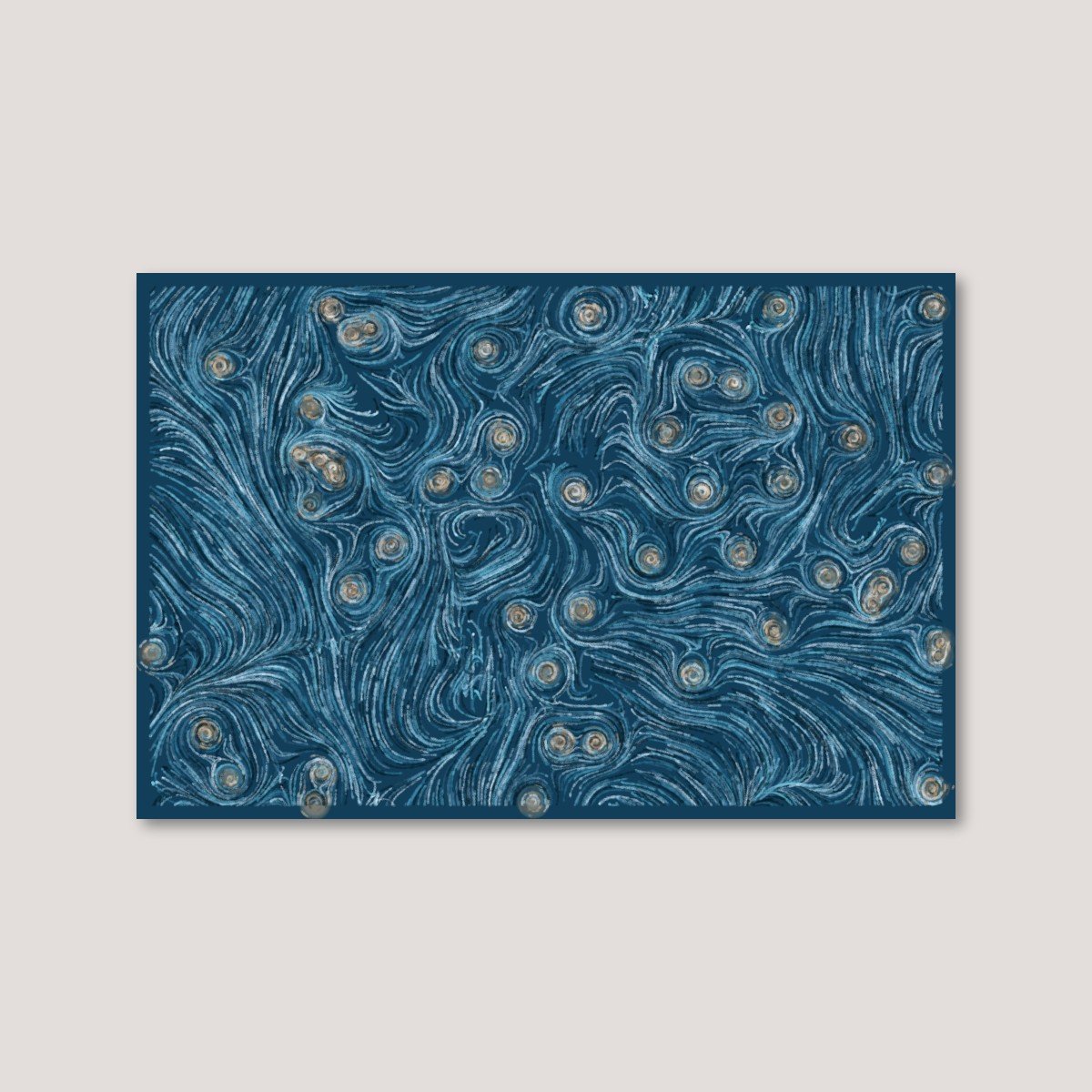
    here is one of my artworks with earthy palette, see my artwork

    What’s Selling:

    • Botanical illustrations and scientific-style plant art
    • Landscape photography in muted, naturalistic palettes
    • Wildlife art rendered in earthy tones
    • Watercolor abstracts evoking natural materials
    • Mixed-media pieces incorporating reclaimed wood, bamboo, and natural fibers
    • Organic abstract forms with soft, flowing shapes inspired by nature

    For artists, this trend suggests a clear direction: work that celebrates nature, uses natural color palettes, and incorporates authentic natural materials will resonate with 2025’s collector. Even purely abstract work that feels organic and grounded in natural color relationships outperforms work in synthetic, artificial color schemes.

    The Texture Revolution: 3D, Sculptural, and Tactile Wall Art

    One of the most profound shifts in wall art is dimensional. Flat is becoming obsolete.

    In 2025, textured and three-dimensional wall art is transforming ordinary walls into dynamic, tactile focal points. This movement reflects a broader interior design principle: material drenching the idea that surfaces should engage multiple senses, not just sight.

    The 3D Wall Art Categories Dominating 2025:

    1. Sculptural Relief Panels

    Gypsum and plaster 3D panels with geometric reliefs are experiencing explosive growth. The global 3D wall panel segment is projected to reach over $800 million by 2025, driven by demand for textured, sustainable surfaces.

    These panels feature precisely sculpted patterns that create subtle shadows and light play throughout the day. Materials like gypsum offer technical advantages non-combustible (A1 rating) and capable of sharp, sophisticated geometries while maintaining natural, tactile surfaces.​

    High-end interior projects are specifying brands like Kandes’ sculptural gypsum panels, where refined geometric reliefs create fluid compositions that shift in appearance as natural light changes.

    2. Layered Mixed Media

    Woven tapestries, macramé creations, and layered textiles combine artisanal craftsmanship with visual sophistication. These pieces bring tactile, handmade quality to contemporary interiors a reaction against mass production and digital homogeneity.​

    3. Metallic and Reflective Wall Art

    Brushed gold, copper, bronze, and stainless steel finishes are adding sophistication and dimensional play to walls. Metal wall art ranges from geometric laser-cut typography to abstract metallic sculptures that play with light and reflection.

    Hand-painted finishes on aluminum sculptures using acrylic enamels, powder coating, and automotive paints create surfaces with depth and luminosity impossible in flat media.​

    4. Multi-Material Composition

    Artists and brands are deliberately mixing materials: wood, metal, glass, recycled plastics, and natural fibers in single pieces. This approach creates visual and tactile depth, giving walls a sculptural quality that feels both modern and artisanal.

    Why Texture Matters Now:

    The shift toward textured, 3D work reflects collector appetite for multisensory experience. Wall art is no longer purely visual it’s something you want to touch, something that engages your sense of scale and spatial awareness. In homes increasingly defined by digital screens and virtual interaction, tactile, dimensional art offers grounding authenticity.​

    For artists: texture and dimensionality command premium pricing. A 3D piece with mixed materials, sculptural relief, or metallic finishes will outperform similar aesthetic work in flat media. The additional material cost and labor are justified by substantially higher market value and collector appreciation.

    The Metallic and Reflective Surface Moment

    Complementing the 3D trend is the explicit embrace of metallic finishes and reflective surfaces.

    Gold, silver, bronze, copper, and chrome are bringing glamour, light-play, and dimensional sophistication to walls. These finishes work across aesthetic spectrums equally at home in contemporary minimalist interiors and more maximalist, layered spaces.

    Current metallic applications:

    • Mirrored wall art etched with fine detail
    • Brushed metal wall panels in geometric patterns
    • Metallic canvas with acrylic paint layered over reflective bases
    • Bronze and copper wall sculptures with patina detail
    • Stainless steel laser-cut artwork

    The appeal is both practical and emotional. Metallic surfaces multiply the effect of natural light, making rooms feel larger and more luminous. They also carry associations with luxury, craftsmanship, and intentionality qualities collectors increasingly seek in wall art.​

    Minimalism and Monochromatic Art: The Power of Restraint

    As some trends push toward texture and scale, another equally powerful movement embraces radical simplicity.

    Minimalist wall art characterized by limited color palettes, clean lines, and open compositions continues to resonate, particularly among collectors seeking calm and visual clarity in their homes. Monochromatic works, using single colors or subtle tonal variations to create depth, have renewed appeal.​

    2025’s minimalist palette:

    • Beige, cream, gray, and other soft neutrals
    • Black-and-white photography and geometric works
    • One-line portraits and delicate line drawings
    • Monochromatic abstracts relying on texture rather than color variation

    Why minimalism endures: In a world of overwhelming visual stimuli, minimalist art offers psychological respite. It creates spaces of visual calm and allows other design elements to breathe.

    This trend works particularly well for artists creating line art, geometric abstracts, and photography-based work. The reduction to essentials actually demands greater conceptual clarity a minimalist work must justify every element’s presence.​

    As an artist i offer also minimalist and photography based art

    Gallery Walls Reimagined: Curated Collections Over Grid Arrangements

    The traditional gallery wall—a grid of same-sized frames—has evolved.

    In 2025, gallery walls are becoming curated collections that blend multiple styles, materials, and mediums, unified by a shared color palette or conceptual thread. Rather than matching frames and symmetrical arrangement, the trend favors eclectic, layered, personal storytelling.

    Modern Gallery Wall Elements:

    • Mix of abstract art, line drawings, and photography
    • Inclusion of sculptural pieces, mirrors, and woven textiles alongside framed work
    • Varied frame styles and finishes (wood, metal, natural materials)
    • 3-5 pieces with different shapes and sizes for visual interest
    • Single common color or material palette tying disparate elements together

    Why this matters for artists: Gallery walls function as editorial curation. Collectors choosing to include your work in a gallery wall context are making a statement about taste, values, and identity. Work that stands alone and harmonizes with other pieces that works in context commands higher selection rates.​

    Digital Wall Art and Generative Prints: The Convergence of Code and Canvas

    A fundamental shift is occurring in wall art: the boundary between digital and physical is dissolving.

    Digital wall art printable designs created in software, customizable, and reproducible has moved from novelty to mainstream. This category includes everything from organic abstracts generated algorithmically to AI-created designs to custom-coded generative art.​

    Digital Wall Art Subcategories in 2025:

    1. Organic Abstracts and Nature-Inspired Digital Art
    Soft, flowing abstract forms inspired by nature earthy color palettes, watercolor textures, irregular shapes. These designs evoke a calming, grounded energy and pair beautifully with minimalist and Japandi interiors.​

    2. Bold Typography and Statement Pieces
    Affirmations, mindfulness quotes, and empowering phrases rendered in bold fonts. 2025 brings retro-inspired typography paired with punchy color blocking or playful neon accents.

    3. Mix-and-Match Curated Sets
    Collections of digital art abstracts, line art, photography tied together by common palette. This allows collectors to create personalized gallery walls without design expertise.​

    4. Vintage and Retro Digital Posters
    AI and digital tools creating convincing mid-century travel posters, 70s graphic design, and faux-weathered vintage imagery. These pieces bring storytelling and nostalgia to walls.

    5. Customizable Digital Art
    Platforms allowing buyers to input text, names, or colors into pre-designed templates (Canva-style). This personalization drives engagement and repeat purchases.

    6. AI-Generated and Generative Digital Collage Art
    Surreal, dreamy imagery blending photography, illustration, and computational generation. Cosmic vibes, ethereal landscapes, unexpected color combinations, and hyper-detailed textures characterize this category.

    The Generative Art Advantage:

    For generative artists like yourself, this trend is explicitly favorable. Custom-coded generative art—where you write the algorithm, embed your aesthetic vision, and generate infinite unique variations—fits perfectly into 2025’s digital wall art market.

    The ability to produce unlimited variations from a single algorithm addresses collector desire for uniqueness without requiring you to hand-create each piece. Generative art prints can be:

    • Customized: regenerated with different seeds to match collector preferences while maintaining artistic coherence
    • Sustainable: printed digitally with minimal material waste
    • Scalable: production scales without additional labor or loss of quality
    • Blockchain-backed: when deployed as NFTs, offering provenance and ownership clarity

    The global online art market is growing at substantial rates—from $10.98 billion in 2024 to projected $18.90 billion by 2033. Digital prints represent a growing share of that market, particularly among younger, tech-savvy collectors.

    NFTs and Blockchain-Based Generative Art

    Within the digital art category, generative art deployed on blockchain platforms is emerging as the highest-value segment.

    Research shows that generative art and blockchain-based art represent the most popular NFT categories, with approximately 50% of digital art collectors expressing interest. Average spending per NFT artwork ranges from $101 to $1,000, with rare, high-quality pieces commanding significantly higher secondary market prices.

    Why generative NFTs command premium value:

    • Verifiable authorship: the algorithm is immutable and publicly verifiable on blockchain
    • Infinite scarcity: the system can generate unlimited variations, each mathematically unique
    • Durability: the code persists forever, immune to platform changes or technological obsolescence
    • Clear ownership: blockchain provides transparent, transferable ownership with no ambiguity

    Platforms like Art Blocks have demonstrated that collectors will pay millions for custom-coded generative systems. The market recognizes that the artist’s system the algorithm itself is the actual artwork. Each variation is an expression of that system, and owning any variation means owning part of the artist’s entire creative vision.​

    For generative artists, this represents extraordinary validation: your code, your systems, your algorithmic vision are becoming recognized art forms worthy of premium investment.

    AI-Generated Art: The Controversial Opportunity

    A more controversial digital trend is AI-generated wall art created via tools like DALL-E, Midjourney, and Stable Diffusion.

    Unlike custom-coded generative art (where you write the algorithm), AI-generated art involves prompting pre-trained models to produce imagery. The trend is growing—with expectations of a 30% year-over-year increase in AI-generated NFTs by 2026—but remains ethically contentious.

    The ethical concerns are real:

    • Training datasets often include copyrighted work without artist permission
    • Copyright ownership of outputs remains legally ambiguous
    • “Prompting” is questioned as a legitimate creative act compared to algorithmic design

    For wall art specifically, AI-generated prints occupy a middle market: accessible, inexpensive to produce, and appealing to first-time art buyers. But serious collectors and galleries treat AI art as distinct from authentic generative or human-created art.

    The implication for your practice: If you’re positioning yourself as an artist, emphasizing that your work uses custom-coded algorithms rather than generic AI generation is essential for premium market positioning. The distinction is real, consequential, and increasingly understood by collectors.

    The Statement Through Craft: Artisanal and Personalization Trends

    A counterweight to technological trends is renewed emphasis on craft, authenticity, and personal storytelling.

    In 2025, wall art is increasingly valued for the story it tells and the artist’s intentionality it reflects. Collectors want to know: Who made this? Why? What values drove their choices?

    Artisanal and craft-focused trends include:

    • Handmade, tactile pieces that show evidence of maker’s hand
    • Supporting emerging and Indigenous artists whose work carries cultural authenticity
    • Made-to-order, customizable work allowing personal connection with artist
    • Pop-up galleries and artist studios enabling direct relationships between maker and collector
    • Upcycled and reclaimed materials transformed into unique pieces with individual narratives

    This trend favors artists who can articulate their practice—the philosophy behind their color choices, material selections, and conceptual approach. Generative artists with thoughtful algorithmic systems can leverage this trend by explaining the “why” behind their code: What aesthetic principles govern your algorithm? How does your personal artistic vision manifest in the parameters you’ve chosen?

    Color Trends Dominating 2025

    Across all the trends discussed, certain colors appear consistently:

    Color/PaletteContextEmotional Quality
    Burnt sienna, clay, olive, ochreNature-inspired, earthyGrounded, warm, organic
    Terracotta, sand, beigeSustainable, minimalistCalming, natural, timeless
    Warm metallics (gold, bronze, copper)Reflective, luxurySophisticated, luminous
    Cool metallics (silver, stainless steel)Modern, industrialContemporary, precise
    Black & whiteMinimalist, graphicElegant, stark, classic
    Neon accentsTypography, modernEnergetic, bold, playful

    The dominance of warm, earthy tones reflects the biophilic and sustainability trends. Even in abstract work, earthy color palettes significantly outperform synthetic or jarring color schemes.

    Market Segments and Pricing Implications

    The trends outlined above create distinct market segments with different price points and collector profiles:

    SegmentCharacteristicsTypical BuyerPrice Range
    Oversized AbstractLarge scale, earthy palette, emotional impactDesigners, established collectors$2,000 – $25,000+
    3D/Textured SculptureMixed materials, tactile, dimensionalDesign-forward homeowners, galleries$1,500 – $15,000
    Sustainable/Eco-ArtNatural materials, eco-certifications, narrativeConscious collectors, younger demographics$800 – $8,000
    Minimalist/MonochromaticRestraint, sophistication, clarityModern collectors, professionals$600 – $5,000
    Digital Prints/GenerativeCustomizable, scalable, unique variationsTech-savvy, younger collectors$50 – $3,000 per print; $5,000 – $500,000+ for NFTs
    Gallery Wall CollectionsCurated sets, mixed media, personal narrativeDIY collectors, new art buyers$500 – $5,000 per collection
    NFT Generative ArtBlockchain-verified, infinite variations, code-basedCrypto-native collectors, serious investors$1,000–$6,000,000+

    Practical Implications for Artists and Creators

    If you’re a generative artist positioning work for wall art sales in 2025, here’s what the trends suggest:

    1. Embrace Sustainability Narratively and Practically

    • Use eco-friendly printing substrates and inks for physical prints
    • Document your digital-to-physical workflow as waste-reducing
    • Consider limited edition or customizable prints rather than mass reproduction

    2. Develop Algorithmic Systems with Earthy, Natural Aesthetics

    • Test color palettes emphasizing warm, natural tones
    • Create organic, flowing forms rather than synthetic geometric abstraction (unless that’s intentional to your vision)
    • Allow your algorithm to generate variations that feel like variations on a natural theme

    3. Create Scalable, Customizable Systems

    • Design algorithms that can generate infinite unique variations
    • Allow collectors to influence parameters (seed, color palette, density)—without losing your artistic voice
    • Enable prints in multiple sizes and materials

    4. Develop Strong Narrative About Your Process

    • Explain why your algorithmic choices create the results they do
    • Connect your code to aesthetic philosophy and artistic intent
    • Help collectors understand they’re acquiring your entire system, not a random output

    5. Consider Blockchain and NFT Deployment

    • High-value generative work commands premium pricing on NFT platforms
    • Art Blocks and similar platforms offer legitimacy and access to serious collectors
    • Blockchain immutability and transparency address market concern about AI art ownership

    6. Position Work Within Gallery Wall Collections

    • Create systems that generate cohesive sets variations that work together in curated arrangements
    • Design pieces that harmonize with earthy palettes and natural imagery
    • Enable collectors to create personalized gallery walls from your algorithmic variations

    2026 and Beyond: Trends With Staying Power

    As 2025 draws to a close, several trends are demonstrating sufficient momentum to carry confidently into 2026:

    • Oversized abstract art will remain dominant; scale and presence are timeless
    • Textured, tactile surfaces will only become more valued as people seek sensory experiences
    • Sustainability will solidify from trend to table-stakes requirement
    • Customization and personalization will become standard expectations
    • Integration of digital, generative, and blockchain art will accelerate

    The trends most likely to fade are those dependent on novelty: fashion-forward colors, meme-based NFTs, and generic AI-generated imagery without artistic vision.

    Conclusion: Wall Art as Identity and Investment

    Wall art in 2025 has transcended decoration. It’s become a form of cultural expression a statement about values, taste, and aesthetic vision.

    Collectors aren’t just hanging pieces for visual interest. They’re selecting art that reflects their commitment to sustainability, their desire for sensory and emotional engagement, their appreciation for craft and personal narrative, and their openness to technological innovation in artistic expression.

    For artists—particularly generative artists creating custom algorithmic systems—this moment is extraordinary. Your work sits at the intersection of multiple trending forces: digital innovation, sustainability, unique customization, and algorithmic artistry. The market is explicitly seeking what you create.

    The question is no longer whether algorithmic art will achieve legitimacy. It already has. The question now is how you position your practice within the diverse, thriving ecosystem of 2025’s wall art landscape.

    Whether you embrace oversized scale, sustainable materials, tactile dimensionality, or algorithmic innovation, the message is clear: wall art in 2025 rewards artists who understand that walls are no longer just surfaces to decorate they’re canvases for personal meaning, expressions of values, and legitimate investments in aesthetic and creative vision.

  • Is It AI or Art? Why Human Coded Algorithms Offer a Soul That Generic Generators Lack

    Is It AI or Art? Why Human Coded Algorithms Offer a Soul That Generic Generators Lack

    art using code, an overlay of code on a canvas with art

    Introduction

    You type a prompt into Midjourney or DALL-E. Seconds later, an image appears. It’s impressive, sometimes beautiful. But something feels hollow.

    Meanwhile, across the digital landscape, an artist sits with Python or Processing, writing thousands of lines of custom code. They iterate for weeks, testing parameters, refining algorithms, embedding their artistic vision into the logic itself. When their generative artwork is minted on Art Blocks, collectors pay premium prices sometimes millions.

    Both produce algorithmic imagery. Both use computation. Yet the art world, collectors, and increasingly the law itself are drawing a sharp distinction: one has soul, the other is a parlor trick with marketing.

    This isn’t gatekeeping. It’s a fundamental difference in creative intent, authorship, and authentic expression. And understanding why matters whether you’re an artist deciding your path, a collector allocating capital, or simply someone curious about what art will actually mean in the algorithmic age.

    The Core Problem: What AI Art Actually Is (And Isn’t)

    Before we can talk about what generative art offers that AI art doesn’t, we need clarity on what “AI art” actually means.

    When you use DALL-E, Midjourney, or Stable Diffusion, you’re not creating art. You’re prompting a machine learning model trained on billions of images scraped from the internet. These models are black boxes you have no insight into how your text becomes an image. The algorithm’s decisions are opaque to you. You refine your prompt, and iteration feels like creation, but fundamentally, a pre-trained neural network is making the generative decisions.

    Here’s the critical legal and philosophical distinction: according to the U.S. Copyright Office, works generated by AI have no copyright because copyright must attach to a human author. The prompt you write isn’t considered sufficiently creative labor to meet copyright threshold. The model itself cannot hold copyright. So who owns the output? Legally, it remains murky a regulatory vacuum rather than a solved problem.​

    There are also serious ethical concerns. These models trained on billions of images, often including copyrighted artwork, without artist permission or compensation. Artists have sued for unauthorized training data use. The system itself, regardless of the output quality, rests on a foundation of potentially stolen intellectual property.

    But the aesthetic and philosophical problem is deeper: prompt-based AI lacks intentionality. The user doesn’t design the system; they direct a pre-existing system. There’s no creative vision embedded in the architecture just clever prompt engineering.​

    Code and art combined to show the coding behind the artworks

    What Generative Art Actually Is

    Generative art is fundamentally different.

    In generative art, the artist writes the algorithm. You don’t prompt a model; you code a system. You design rules, parameters, mathematical functions, and control structures from scratch or deeply customize existing frameworks. You test outputs, iterate on the logic, and deliberately embed your aesthetic vision and creative intent into the algorithmic code itself.

    When Tyler Hobbs created Fidenza, he didn’t ask an AI to make flowing curves. He wrote code that generated curves according to his specific artistic philosophy. Every parameter, every mathematical relationship, every interaction between elements reflects his creative choices. The algorithm is an extension of his artistic voice.

    When you code generative art, the “rules” of your system are your artistic statement. The randomness you introduce, the probability distributions, the color relationships, the compositional constraints all of it is intentional design.​

    This is why custom-coded generative art attracts serious collectors and commands premium prices. You’re not buying the random output of a training dataset. You’re buying the artist’s entire system, encoded on the blockchain, reproducible forever, yet generating infinite unique variations.

    The Soul Factor: Intent, Authorship, and Emotional Depth

    Here’s what research reveals about why people value human-created art including human-coded generative art so much more than prompt-based AI:

    The Authorship Problem

    In a landmark study from Columbia Business School, participants valued art labeled as “human-made” at 62% higher prices than art labeled “AI-generated,” even when the aesthetic quality was comparable. When asked why, participants consistently pointed to perceived creativity, labor, and emotional authenticity.

    Why? Because human authorship implies intent, vision, and personal stake. When you write custom code for generative art, every function, every parameter you tweak, every philosophical decision you embed represents your creative labor and vision. There’s a continuous through-line from your imagination to the final system.

    With prompt-based AI, that thread is broken. You’re directing a black-box system designed by engineers you’ll never meet, trained on data you don’t understand, making decisions you can’t control. The model doesn’t care about your vision; it cares about pattern-matching against its training data.

    Copyright Clarity

    This distinction matters legally. Under current U.S. law, generative art created through custom code and algorithms can be copyrighted if there is substantial human creative input in the system design. The artist of such work holds intellectual property rights. They control distribution, monetization, and reproduction.

    Prompt-based AI art? Legally uncopyrightable under current interpretation. You own nothing. You can’t prevent others from using your prompts to generate identical imagery. You have no legal claim to the output.

    This uncertainty cascades through the market. Seasoned art collectors the ones with serious money and discernment have overwhelming avoided prompt-based AI art. Only 2% have purchased it, while 29% might consider it in the future. But for generative NFT art on platforms like Art Blocks? Billions in trading volume, with elite works commanding prices in the millions.

    The market is voting with capital: it values authorship and intentional creation.

    The Emotional Connection: Generations, Not Prompters

    Research on emotional responses to generative art reveals something fascinating: custom-coded generative art evokes deeper emotional engagement than both static images and prompt-based AI output.

    Why? Because generative artists embed meaning into the system itself. They choose color palettes deliberately. They design compositional constraints intentionally. They write algorithms that create emergence complexity that arises from simple rules, producing outcomes that feel alive and organic precisely because the artist orchestrated the conditions that create them.​

    When you view a piece of Fidenza or a custom-coded generative work, you’re experiencing the artist’s entire philosophy translated into computational form. The soul is there not in the image, but in the system that generates infinite variations.​

    Contrast this with a Midjourney output: you see a prompt’s result, a pattern-match against training data. It may be visually sophisticated, but there’s no artist voice behind it no intentional emotional architecture, no personal vision encoded into the generation process.​

    A study examining emotional responses to generative art found that participants experienced heightened awareness and emotional engagement when interacting with works designed with deliberate compositional and philosophical intent. The “soul” emerges not from the pixels but from the design of the system that generates them.

    Why Collectors Distinguish (And Price Accordingly)

    The market premium for custom-coded generative art reflects rational collector behavior:

    1. Authenticity and Provenance

    When you acquire a generative artwork on Art Blocks or a blockchain-based platform, the algorithm is written directly to the smart contract, immutable and public. You’re not just owning an image; you’re owning a piece of the code itself. You can verify the artist created it, examine the algorithm, and understand exactly how the system works.

    With prompt-based AI art, there’s no provenance chain. Anyone can type the same prompt into Midjourney and generate something identical or very similar. There’s no scarcity model. There’s no verifiable authorship.

    2. Scarcity with Permanence

    A custom-coded generative system can produce infinite outputs each unique, each valid. Yet the system itself is singular and permanent. Collectors aren’t competing for the “1 of 1” static image; they’re co-owning a piece of the artist’s generative philosophy, stored forever on the blockchain.​

    This is a fundamentally new form of ownership in art history. You don’t own “the painting” you own a deterministic hash within an algorithm that will produce the same output forever, yet belongs uniquely to you.​

    3. Curator’s Vision

    When a generative artist writes custom code, they curate the possibility space. They decide what colors are possible, what compositions can emerge, what variations exist within their system. This curatorial vision is precisely what collectors pay for.

    Prompt-based AI offers no curation. The training dataset is the curator, and it’s designed by engineers optimizing for plausible outputs, not artistic coherence.

    The Empirical Gap: Market Pricing Reflects Value

    The numbers tell the story:

    • Human-created artwork valued 15-25% higher than AI art by study participants
    • When explicitly labeled as “human-made” vs “AI-generated,” human art commands a 62% premium
    • Of seasoned art collectors, only 2% have purchased prompt-based AI art, while 29% might consider it
    • Generative NFT market (Art Blocks et al): $1.3 billion+ in trading volume
    • Record-breaking generative art sale: Ringers #879 (custom code by Dmitri Cherniak), $6.2 million at Sotheby’s

    The contrast is striking: custom-coded generative art commands auction-house prices and museum interest. Prompt-based AI art attracts new, younger collectors but struggles to establish resale value or long-term appreciation.

    This isn’t because prompt-based AI images are always ugly they can be quite impressive. It’s because collectors, curators, and the art market recognize that there’s no authorship behind them.​

    The Intent Question: What Makes Art “Soul”?

    Philosophers and researchers increasingly argue that the “soul” of art isn’t in the finished product it’s in the intentionality and system design.​

    When you code generative art, you’re making thousands of micro-decisions:

    • What probability distributions govern the appearance of elements?
    • How do components interact and constrain each other?
    • What range of color palettes is possible?
    • How much randomness creates novelty without chaos?
    • What mathematical functions express my artistic voice?

    Each decision is an act of creative will. The artist’s taste, intuition, philosophy, and personal aesthetic are embedded in the algorithm itself. Someone familiar with your work can “hear” your voice in your algorithms the same way you can recognize a Basquiat or a Rothko.​

    With prompt-based AI, there’s no such opportunity for voice. The training data and neural network architecture designed by people you’ll never know—mediate between your intention and the output. Your “prompt” is more like a very specific library search query than an act of creation.​

    Isn’t It All Just Algorithms?

    One might argue: “Both are algorithms. Both produce images. Isn’t the distinction artificial?”

    No. Here’s why:

    Generative art = The artist is the system designer. The creative act is writing the algorithm itself. The output is a consequence of that design. The artist’s vision is embedded in the logic.

    Prompt-based AI = The user is the system operator. The creative act is directing a pre-trained model via natural language. The system’s design is opaque and beyond the user’s control. The user’s vision is filtered through a black box.

    It’s the difference between a composer writing a symphony and a DJ selecting pre-recorded songs. Both involve sound and sequence, but the creative agency is entirely different.

    The art world understands this distinction. Major auction houses like Christie’s and Sotheby’s now feature generative art in contemporary art auctions custom-coded work alongside painting and sculpture. They don’t feature Midjourney outputs in equivalent prestige sales. The institutional art world has made its judgment: one is art, one is design output.​

    The Copyright Question: Who Actually Owns This?

    This matters enormously for artists and collectors.

    Generative Art (Custom Code):

    • The artist owns the algorithm and can copyright it
    • Ownership is legally clear and enforceable
    • Collectors can sell their pieces with full property rights
    • Blockchain registration (on Art Blocks, etc.) provides permanent, immutable provenance

    Prompt-based AI Art:

    • No copyright protection under current U.S. law
    • Ownership is legally ambiguous
    • DALL-E assigns rights to the prompt creator, but terms are unclear
    • Midjourney only assigns rights to paid subscribers; free users own nothing
    • Any terms of service can change, leaving ownership claims vulnerable

    If you’re a collector investing in art for appreciation or legacy, this distinction is critical. Custom-coded generative art offers legal clarity and permanence. Prompt-based AI offers uncertainty and regulatory risk.

    The Contradiction: Why Collectors Still Buy AI Art

    Here’s the paradox: while seasoned collectors avoid prompt-based AI, younger and newer collectors are entering the market through it. Why?

    Accessibility: You don’t need to understand code or have technical skills to use Midjourney or DALL-E. The barrier to entry is a credit card and curiosity.

    Novelty appeal: The technology is new, visually impressive, and there’s a cultural moment around AI right now. Early adopters find that appealing.

    Lower cost: Prompt-based AI art is cheap to produce and inexpensive to purchase. It’s an accessible entry point to digital art collecting.

    But here’s what the data suggests: these are first-time buyers, not serious collectors. The same way someone might buy an NFT of a meme and later realize they prefer art with institutional backing and lasting value. As the market matures, generative art (the kind with custom code, artistic vision, and legal clarity) will likely appreciate while commodity prompt-based outputs commoditize.

    The Future: Algorithmic Authenticity

    As custom coding becomes more accessible (tools like Processing and p5.js make it feasible), the distinction will become even sharper.

    The next generation of generative artists will embed increasingly sophisticated algorithms not just visual patterns but interactive systems, AI-assisted design tools, real-time data feeds, and emergent behaviors. These systems will be orders of magnitude more complex and intentional than anything producible via prompting.​

    Meanwhile, prompt-based AI will become commoditized. Everyone will have access to the same models. The outputs, while sometimes lovely, will blur together. Without algorithmic distinctiveness or verifiable authorship, there’s no collecting thesis.

    The art world’s trajectory is clear: authenticity and intent matter. Custom-coded generative art will mature into a major art movement, recognized and valued alongside painting, sculpture, and photography. Prompt-based AI will find its place as a design tool useful, but not art in the collector’s sense.

    Conclusion: The Soul Is in the System

    The “soul” of generative art isn’t in the finished image. It’s in the algorithm the artist wrote. It’s the thousands of intentional choices about how a system should generate emergence, the philosophical constraints that shape possibility, the aesthetic vision encoded in mathematical relationships.

    When you own a piece of Art Blocks generative art, you’re not just looking at pixels. You’re engaging with an artist’s entire creative system one that will generate unique works forever, deterministically tied to the blockchain, with full legal ownership and clear provenance.

    When you download a Midjourney image, you’re looking at a pattern-match against a training dataset. It’s impressive, sometimes beautiful but it’s not art. It’s design. The artist is the engineer who built the model, not the person who typed the prompt.

    This isn’t elitism. It’s recognizing that art requires intentionality. And intentionality requires the artist to design the system itself.

    The market, the law, the institutions, and serious collectors are all converging on this same conclusion. In the coming years, that distinction will only sharpen. The artists who write their own algorithms, who embed their vision into code, who design systems that generate infinite expressions of their singular creative voice—those artists will be remembered.

    The prompt-givers? They’ll fade, replaced by the next batch of prompt-givers, indistinguishable from one another, commoditized into meaninglessness.

    Because that’s what art actually requires: a soul. And a soul can’t be generated by a black box. It has to be coded into being by a human hand, a human mind, and a human vision.

  • The Psychology of Focus: Designing Your Home Office with Calming Abstract Patterns

    The Psychology of Focus: Designing Your Home Office with Calming Abstract Patterns

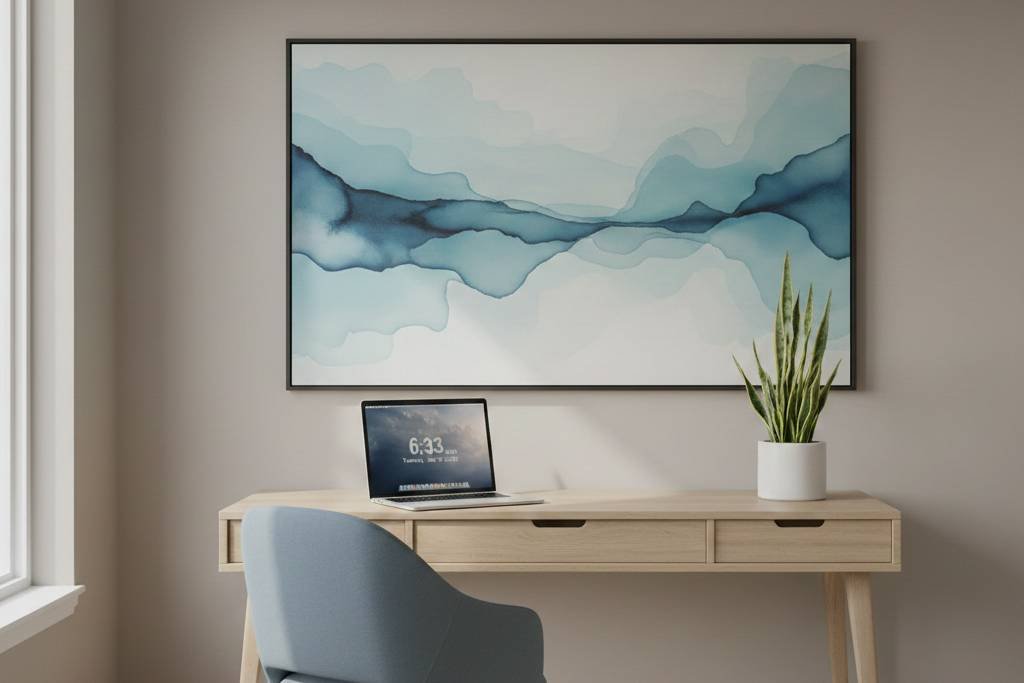
    home Office calm design

    Introduction: Your Home Office Is Your Competitive Advantage

    Remote work isn’t a trend anymore it’s a structural shift in how professionals work. According to recent data, approximately 22.8% of U.S. employees work remotely at least part-time, representing roughly 35 million people. And the numbers keep climbing.

    But here’s the uncomfortable truth: simply working from home doesn’t guarantee productivity. What matters is how you design your space.

    A Stanford study spanning 16,000 workers found that remote work increased productivity by 13% but only when the environment was intentional. Those working in carefully designed home offices reported fewer distractions, fewer breaks, and measurably better output. Meanwhile, poorly designed home offices become sources of distraction, stress, and burnout.

    The difference often comes down to one overlooked element: the visual environment itself.

    Your walls, colors, and artwork aren’t just decoration. They’re neurotransmitter triggers. They either support deep focus or sabotage it. And in 2026, smart professionals are designing their home offices around one key principle: visual calm paired with psychological stimulation.

    This is where abstract art—specifically, thoughtfully selected calming patterns—becomes a productivity tool.

    The Neuroscience of Focus: How Your Brain Stays on Task

    NeuroScience color image

    To understand why the right artwork matters, you need to understand how your brain manages attention.

    The “Traffic Directors” in Your Brain

    Your brain is under constant assault by visual stimuli. Right now, as you read, your eyes are registering hundreds of potential distractions: colors, movements, shapes, text, shadows. Yet you can focus on this sentence. Why?

    Neuroscientists at the University of Pennsylvania School of Medicine discovered the answer. In their research, they identified a set of neurons in the lateral prefrontal cortex (LPFC) that act as “traffic directors” for your visual attention. These neurons, called visual-movement neurons, essentially decide which visual stimulus you focus on and which you ignore.

    The researchers observed something critical: when these neurons fire together in a coordinated pattern called “beta bursts,” focus strengthens. When beta bursts are strong before a distraction appears, your brain successfully ignores the distraction and maintains task focus. When beta bursts are weak, your attention gets captured by whatever bright, shiny, or novel stimulus appears.

    In other words, maintaining focus is an active, energetically expensive process. It requires your brain to constantly suppress distraction.

    Visual Distraction Is Contagious

    Here’s where it gets concerning: a 2022 MIT study found that visual distractions don’t just capture your spatial attention they disrupt your entire attentional filtering system. Researchers presented participants with arrays of hybrid images (overlapping faces and houses). When participants were tasked with focusing on “houses,” a salient visual distractor (a white rectangle) would appear elsewhere on screen.

    The result was surprising: not only did participants’ attention get captured by the distractor, but their brain’s category-based filters the systems that help them ignore irrelevant information completely broke down. The filter disruption was so profound that it temporarily reversed the brain’s attentional priorities.

    Translation: A cluttered, visually chaotic home office doesn’t just distract you once. It disrupts your fundamental ability to filter distractions, making everything harder to ignore.

    What This Means for Your Home Office

    Your home office walls are either:

    1. Visual noise: Clashing colors, busy patterns, multiple focal points competing for attention, cluttered décor. Every glance costs cognitive energy as your brain’s traffic directors struggle to suppress distractions.
    2. Visual calm: Cohesive, intentional aesthetics, minimal competing stimuli, patterns that engage without demanding attention. Your brain’s attentional filters remain intact, preserving energy for actual work.

    The difference in productivity can be 15-30% depending on the individual and task type.

    Color Psychology: The Science Behind What You See

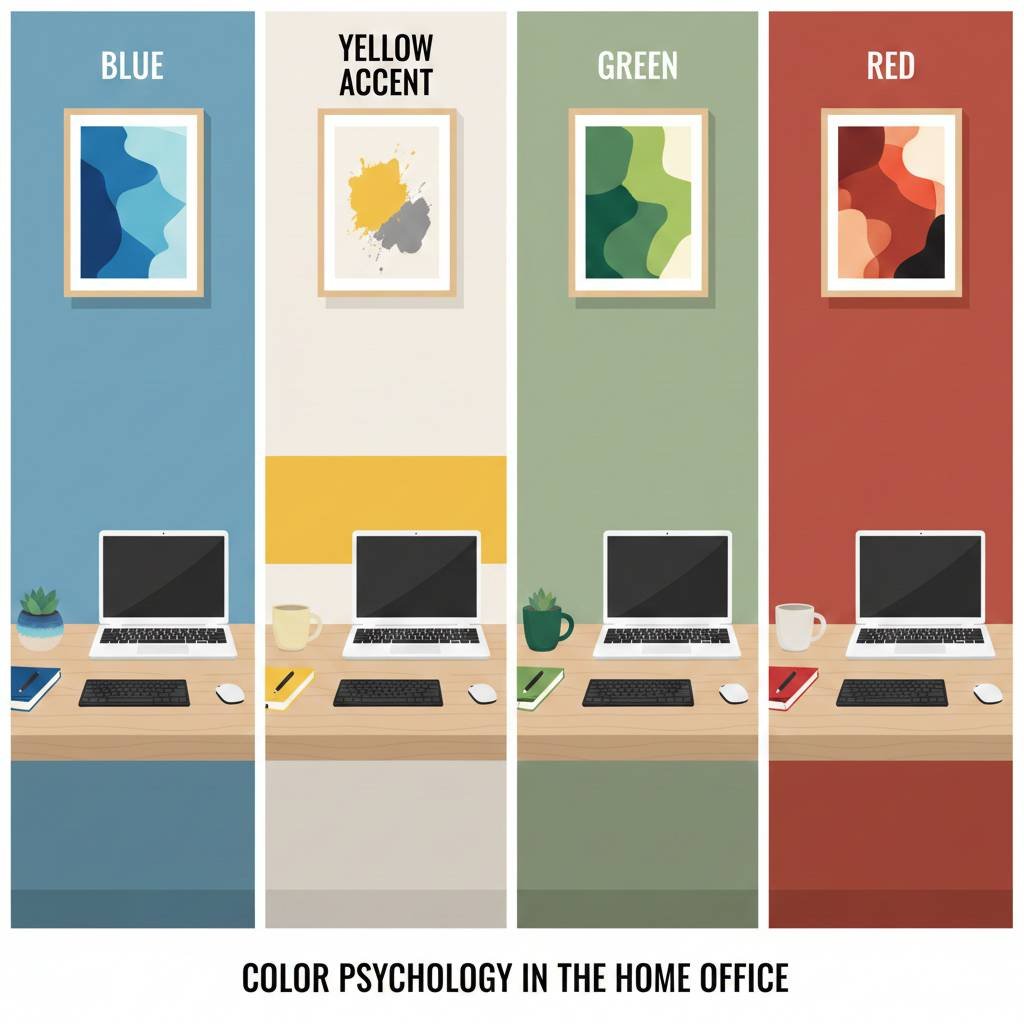
    Office colors and their meaning

    Colors aren’t subjective preferences. They trigger measurable neurological and physiological responses.

    Blue: The Focus Color

    Blue is the productivity champion. Multiple studies confirm that blue enhances concentration, stimulates thinking, and provides mental clarity. When applied to home office walls or artwork, blue:

    • Reduces anxiety and promotes calmness
    • Improves concentration and focus
    • Supports sustained attention during detail-oriented work
    • Lowers heart rate and blood pressure, creating a calm state

    A 2026 study published in Nature compared workspace wall colors across four conditions: red, blue, green, and yellow. Productivity was measured objectively using proofreading tasks. Results showed productivity was significantly highest in blue conditions (alongside yellow and red), while green actually reduced productivity.

    Why? Blue is cognitively soothing without being sedating. It supports focus without requiring emotional energy.

    Yellow: The Optimism Color

    Yellow stimulates innovation, creativity, and optimism. It works well for:

    • Brainstorming sessions
    • Creative work
    • Morning motivation
    • Breaking mental fatigue

    However, used excessively, yellow can overstimulate. The key is balance: a neutral base with yellow accents.

    Green: The Balanced Choice (With a Caveat)

    Green is associated with balance, growth, and nature. Interestingly, while nature-inspired imagery with green tones reduces stress, pure green walls or excessive green artwork can paradoxically reduce productivity. The 2026 study found productivity was lowest in pure green conditions.

    The lesson: green works best as a nature element (plants, landscape artwork) rather than as a dominant color scheme.

    Red: The Energy Color

    Red increases heart rate, energy, and urgency. In short bursts, it can energize. But sustained exposure to red increases anxiety and stress, making it unsuitable for focused work environments.

    The Color Psychology Summary for Home Offices

    ColorEffect on FocusBest UsesAvoid
    BlueEnhances concentration, calms mindPrimary color for focused work zonesExcessive blue can feel cold
    YellowStimulates creativity, boosts optimismAccents for creative daysOveruse causes overstimulation
    GreenBalances mood (when nature-based)Plants and natural imageryPure green as dominant color
    RedEnergizes but increases stressBrief, motivational accents onlyLong-term exposure in work zones
    Warm neutralsSupports ease and collaborationBreak areas, meeting nooksNot suitable for intense focus zones

    Abstract Patterns: Engagement Without Distraction

    abstract image pattern

    This is where abstract art becomes a strategic tool.

    Why Abstract Patterns Work

    Unlike realistic imagery, abstract patterns have a unique property: they engage your brain’s pattern-recognition systems without demanding narrative attention.

    When you look at a photograph of a landscape, your brain automatically engages several systems:

    • Face recognition (if there are people)
    • Narrative construction (“What is this scene about?”)
    • Emotional response (“Is this safe? Threatening? Peaceful?”)
    • Memory association

    This takes cognitive resources away from your actual work.

    Abstract patterns, by contrast, trigger your brain’s aesthetic appreciation and pattern recognition, satisfying your need for visual interest without triggering narrative processing. You find them beautiful or engaging, but they don’t demand your story-making brain.

    In essence, abstract art is visually stimulating but cognitively quiet.

    The Best Abstract Patterns for Focus

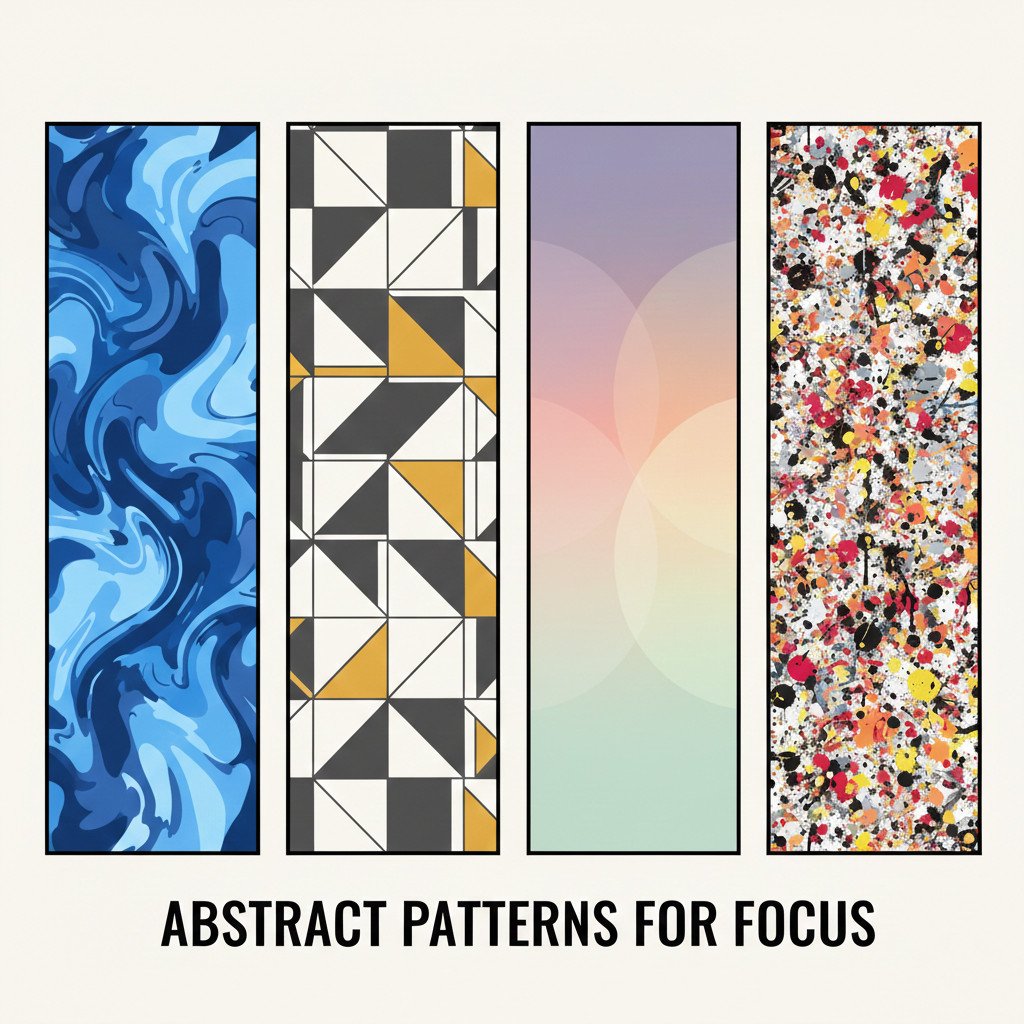
    Flowing, organic patterns: These mimic natural flow and have a calming effect. They’re mathematically interesting (they engage your visual system) but not cognitively demanding.

    Geometric progressions: Patterns that follow mathematical rules (repeating shapes, fractal-like structures) satisfy your brain’s pattern-seeking nature without creating visual chaos.

    Soft, overlapping forms: Instead of sharp contrasts or high-frequency visual noise, patterns with soft edges and gradual transitions keep the brain calm.

    Color-gradient patterns: Abstract art that uses color psychology (e.g., soft blues and purples that transition smoothly) combines color therapy with visual interest.

    What to Avoid in Abstract Office Art

    • High-contrast, jarring colors: Red and black sharply juxtaposed creates visual tension.
    • Chaotic, dense patterns: Overly busy abstractions feel visually demanding, not soothing.
    • Purely representational art in busy environments: If your home office is already stimulating, figurative art can overwhelm.
    • Multiple competing focal points: Art with many areas demanding attention creates the same distraction problem you’re trying to solve.

    The Research Connection: Why Art Reduces Stress and Boosts Productivity

    The relationship between art and productivity isn’t anecdotal. Multiple peer-reviewed studies confirm the effect:

    Study 1: Stress and Concentration (2024)

    Employees working in environments adorned with art reported significantly lower stress levels and higher levels of concentration compared to those in blank, art-free offices. The effect was strongest when art was abstract or nature-inspired.

    Study 2: Mental Well-being (2025)

    Exposure to art in workspaces improved mental health by satisfying psychological needs for autonomy (control over environment) and competence (feeling capable). This translated to better overall well-being.

    Study 3: Specific Art Effects (2024)

    Research on workplace art found:

    • 78% of respondents agreed that art reduced stress levels
    • 64% stated that art increased and inspired creativity
    • Art in offices reduced anxiety, distress, and fatigue
    • Viewing art activated the brain’s reward system, releasing dopamine

    Study 4: Color Psychology (2026)

    The Nature study comparing wall colors in simulated workspaces found that color significantly influenced productivity. Blue and yellow environments showed the highest productivity metrics, while green (paradoxically) showed the lowest.

    The Mechanism: How Art Reduces Cognitive Load

    When you view beautiful, calming artwork:

    1. Your reward system activates: The brain releases dopamine, creating a mild positive mood.
    2. Stress hormones decrease: Cortisol and adrenaline drop, allowing your nervous system to relax.
    3. Your attentional filters strengthen: By reducing ambient stress, your brain’s traffic-director neurons (the LPFC visual-movement neurons) function more efficiently.
    4. Mental energy is preserved: You’re not expending resources fighting visual noise, so more cognitive capacity remains for actual work.

    The result: you focus deeper, longer, and with less mental fatigue.

    Designing Your Focus-Friendly Home Office: A Practical Framework

    Now that you understand the why, here’s the how.

    Step 1: Choose Your Focus Color Base

    Determine the primary color for your work zone:

    • For analytical, detail-oriented work (data analysis, writing, editing): Blue or cool-toned environments
    • For creative work (design, strategy, brainstorming): Blue with yellow accents
    • For balanced work (meetings, communication, varied tasks): Warm neutral with blue-toned art

    Keep the dominant color calming. You want your brain’s beta bursts supporting focus, not fighting stimulation.

    Step 2: Select Abstract Art Strategically

    Choose 1-3 pieces of abstract art that:

    1. Use your chosen color palette: If blue is your focus color, select abstract art that incorporates blues, soft purples, and warm neutrals.
    2. Feature flowing or geometric patterns: Avoid busy, chaotic abstractions. Choose patterns that feel organized yet organic.
    3. Are placed in your primary sight line: Position art where you’ll see it during breaks, but not directly in your line of sight to your work. (You want it to be a mental rest point, not a distraction.)
    4. Match the scale of your space: A single large piece often works better than multiple small pieces; it reduces competing focal points.

    Step 3: Manage Visual Clutter Elsewhere

    Art isn’t the only visual element in your office. Consider:

    • Desk organization: Hide cables, minimize items on your desk surface. Visual clutter increases cognitive load.
    • Storage: Closed storage (shelves with doors, filing cabinets) reduces visual noise compared to open shelving.
    • Neutral backgrounds: Keep wall colors (outside your art) neutral or soft. Avoid multiple competing colors.
    • Minimal decorative objects: Each item in your field of view is a potential distraction. Less is genuinely more.

    Step 4: Layer in Technology and Biophilic Elements

    Modern home offices in 2026 combine artwork with:

    • Plants: Real or high-quality artificial plants add biophilic calm without visual noise.
    • Natural light: Maximize window access and use full-spectrum lighting that mimics natural light.
    • Acoustic panels: Soft surfaces (felt, cork) reduce sound bounce and visual harshness compared to hard surfaces.
    • Hidden technology: Cables, monitors, and tech should be as invisible as possible.

    Algorithmic Art for Focus: A New Frontier

    Here’s where personalized, algorithmic abstract art becomes uniquely powerful for home offices.

    The Advantage of Algorithmic Patterns

    Algorithmic generative art abstract patterns generated from mathematical rules and personalized inputs offers a unique benefit: visual uniqueness without cognitive demand.

    Unlike mass-produced abstract art, algorithmic pieces are generated from your inputs (date, preferences, parameters). The result:

    • Personally relevant: The artwork is generated from data meaningful to you, even if you’re not consciously aware of the connection.
    • Visually cohesive: All algorithmic pieces from the same artist/algorithm family have visual DNA that ties them together, reducing cognitive friction.
    • Mathematically grounded: Underneath the visual beauty is mathematical order, which your brain finds satisfying.
    • Never identical to anyone else’s: Unlike mass-produced prints, your algorithmic art is genuinely unique, reinforcing the sense that your space is yours.

    Using Algorithmic Art for Different Work Modes

    Different work modes benefit from different algorithmic parameters:

    For Deep Focus Work (writing, analysis, coding):

    • Use algorithmic art generated with lower chaos parameters
    • Cooler color palettes (blues, purples)
    • More geometric, structured patterns
    • The piece itself becomes a visual anchor, reminding you: “This is focus mode”

    For Creative Work (design, brainstorming, strategy):

    • Use algorithmic art with higher visual complexity
    • Warmer accents (yellows, warm oranges) within a cool base
    • Flowing, organic patterns with surprise elements
    • The piece stimulates lateral thinking without demanding narrative attention

    For Rest Breaks:

    • Algorithmic art with very soft, nature-inspired color palettes
    • Minimal visual complexity
    • The piece becomes a mental reset point

    Phygital Integration for Home Office Art

    Algorithmic art is uniquely suited for phygital enhancement:

    NFC-Enabled Productivity Tips: Your algorithmic artwork includes a hidden NFC tag that, when tapped, reveals:

    • A productivity quote or focus tip
    • The mathematical concept behind the pattern
    • A timer or break reminder

    AR Visualization: Scan your algorithmic art to see:

    • An animated visualization of how the pattern was generated
    • Interactive sliders showing alternative parameter variations
    • An explanation of the algorithm’s visual rules

    Smart Display Rotation: On a smart frame, your algorithmic art can:

    • Cycle through variations throughout the day (morning focus mode, afternoon creative mode, evening rest mode)
    • Change intensity or color saturation based on time of day
    • Highlight different aspects of the pattern as you interact with your space

    Practical Setup Guide: From Concept to Focused Reality

    The 90-Day Home Office Transformation

    Week 1-2: Assessment

    • Identify your primary work mode(s): analytical, creative, or hybrid?
    • Audit your current space for visual clutter, competing colors, and distractions
    • Measure your current baseline: How long can you focus before distraction? How’s your mood at day’s end?

    Week 3-4: Color and Base Setup

    • Choose your primary focus color (likely blue or cool-toned)
    • Neutralize competing colors on walls and furniture
    • Add one piece of abstract art in your chosen color palette, positioned for peripheral viewing during breaks
    • Implement basic cable management and storage organization

    Week 5-8: Optimization

    • Add plants and natural elements
    • Optimize lighting (full-spectrum, non-glare)
    • If using algorithmic art, select personalized pieces with meaningful inputs
    • Test different configurations; track focus duration and mood

    Week 9-12: Refinement

    • Remove anything that doesn’t serve focus or well-being
    • Add phygital elements if desired (NFC, AR, smart frames)
    • Establish a ritual: same time, same space, intentional focus
    • Document your setup for future reference and adjustment

    Quick Checklist for Focus-Optimized Home Offices

    •  Primary color is calming (blue, cool tones, or warm neutrals)
    •  1-3 pieces of abstract art, positioned for peripheral rest, not distraction
    •  Desk surface is clear (monitor, keyboard, coffee, pen nothing else)
    •  Cables are hidden
    •  Storage is closed or minimal
    •  Natural or full-spectrum lighting is optimized
    •  At least one plant or natural element is visible
    •  Artwork reflects your personal identity or meaningful data
    •  A clear visual or ritual marks the start and end of focus time
    •  Your background (for video calls) looks intentional and calm

    Conclusion: Your Home Office as a Productivity Instrument

    Remote work is here to stay, and your home office is no longer a temporary setup it’s where you spend 40+ hours per week. The question isn’t whether to invest in your environment; the question is whether to invest intentionally.

    The neuroscience is clear: visual environment shapes focus. Color psychology is measurable. Abstract art reduces stress and enhances concentration. The research isn’t theoretical; it’s based on brain imaging, productivity measurements, and workplace experiments across thousands of workers.

    Your home office walls aren’t decoration. They’re tools. Neurotransmitter triggers. Productivity amplifiers.

    In 2026, the most successful remote workers aren’t just disciplined—they’re strategic about their surroundings. They choose colors for focus. They select abstract patterns for calm stimulation. They eliminate visual noise. They understand that a well-designed environment isn’t a luxury; it’s a necessity.

    The best part? You don’t need a designer or a large budget. You need intention.

    Pick one color that calms you (likely blue). Choose one or two pieces of abstract art that you genuinely enjoy. Clear your desk. Hide your cables. Add a plant. Notice the difference.

    Within weeks, you’ll likely find yourself more focused, less stressed, and genuinely looking forward to your work hours.

    That’s not coincidence. That’s neuroscience in action.